
Testing is a central principle in ’Pataphysics. The Autonomous series takes this as a starting point, examining how the frame shapes embodied perception and the act of drawing.
-
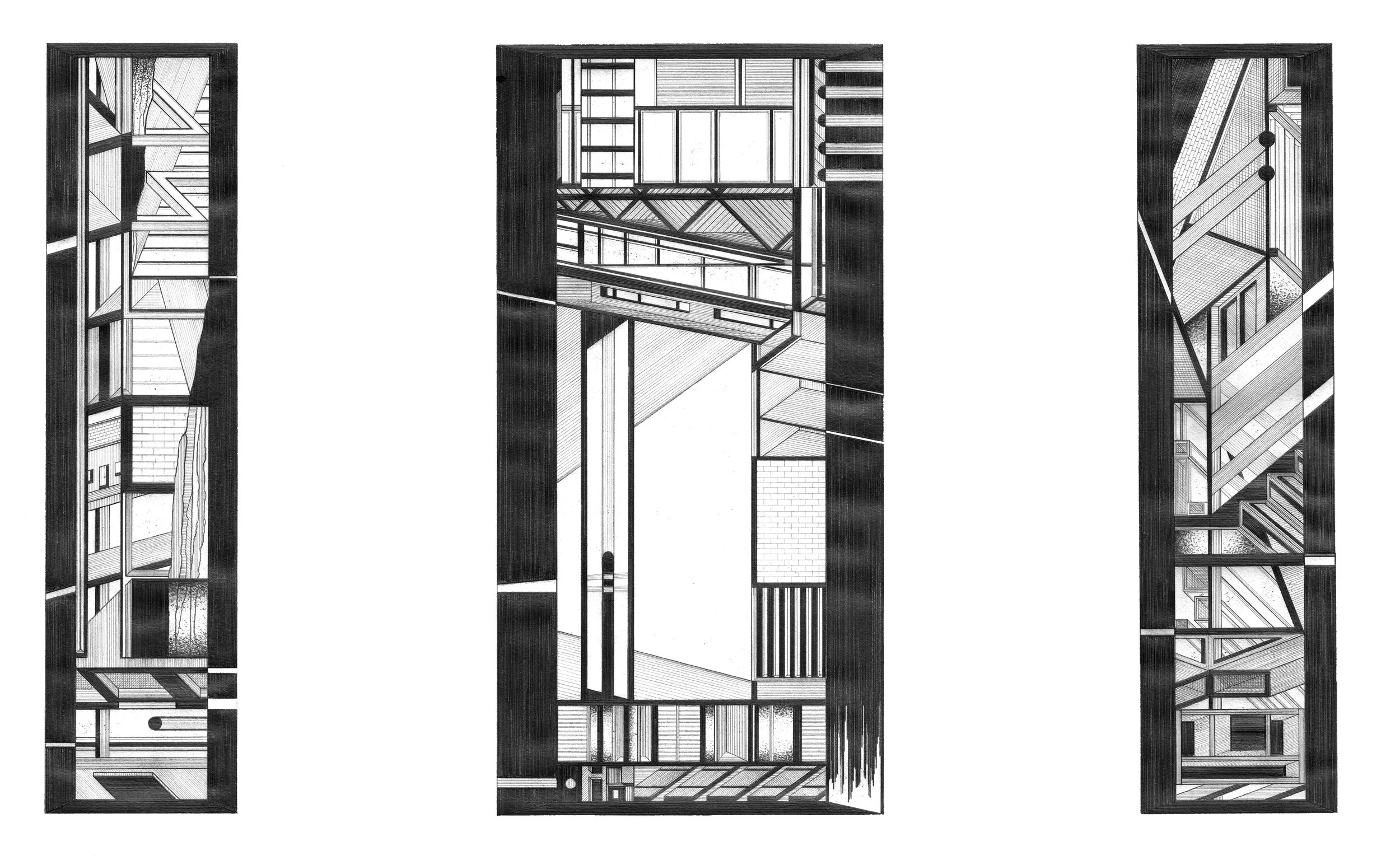
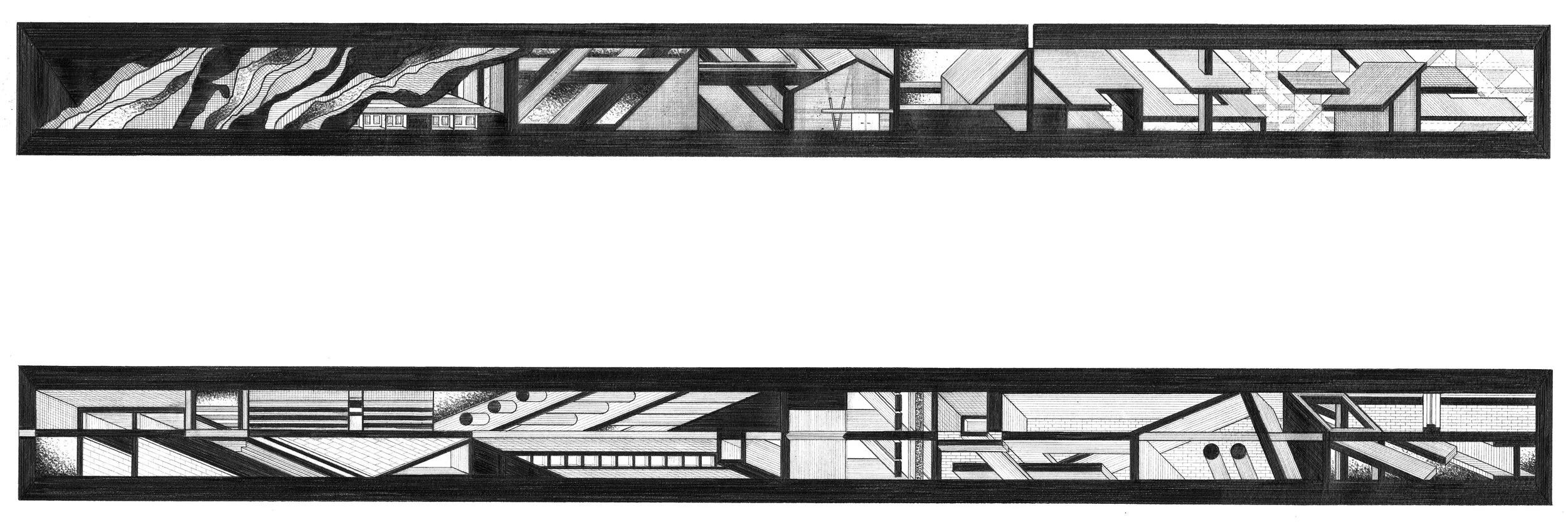
Whether it is the edge of the paper, the limits of the surface, or the implied space beyond it, the frame remains an inescapable condition. These drawings work with and against that presence, introducing additional frames that impose new constraints. Within this structure, an axonometric language of chance is set into tension with control.
Here, both line and eye are directed and contained, making composition the dominant spatial force. Rather than limiting the work, these constraints create the conditions for disruption—moments where the unexpected begins to emerge.
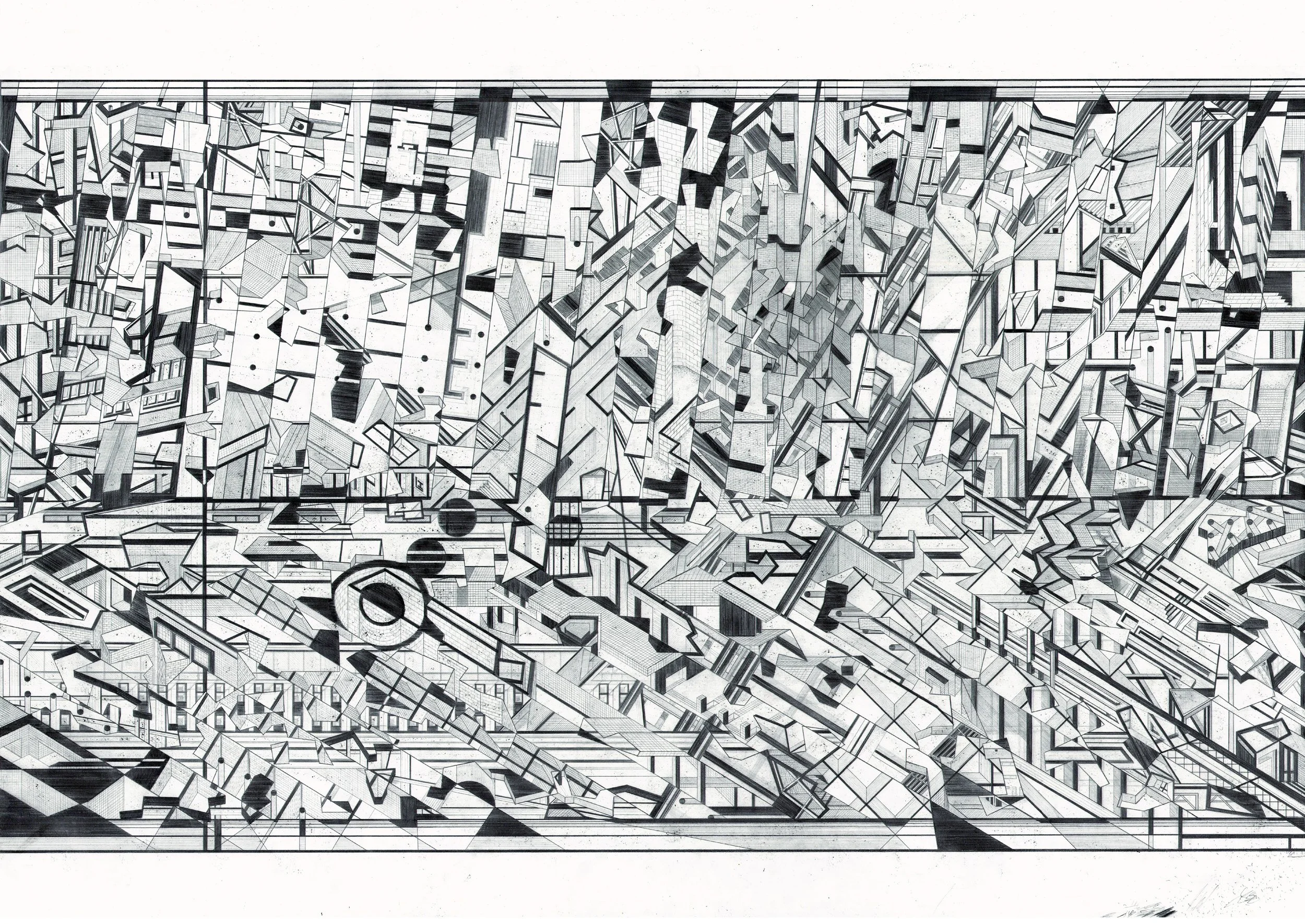
France and the Wall (2019) Graphite, Paper
Door Bar (2019) Graphite, Paper
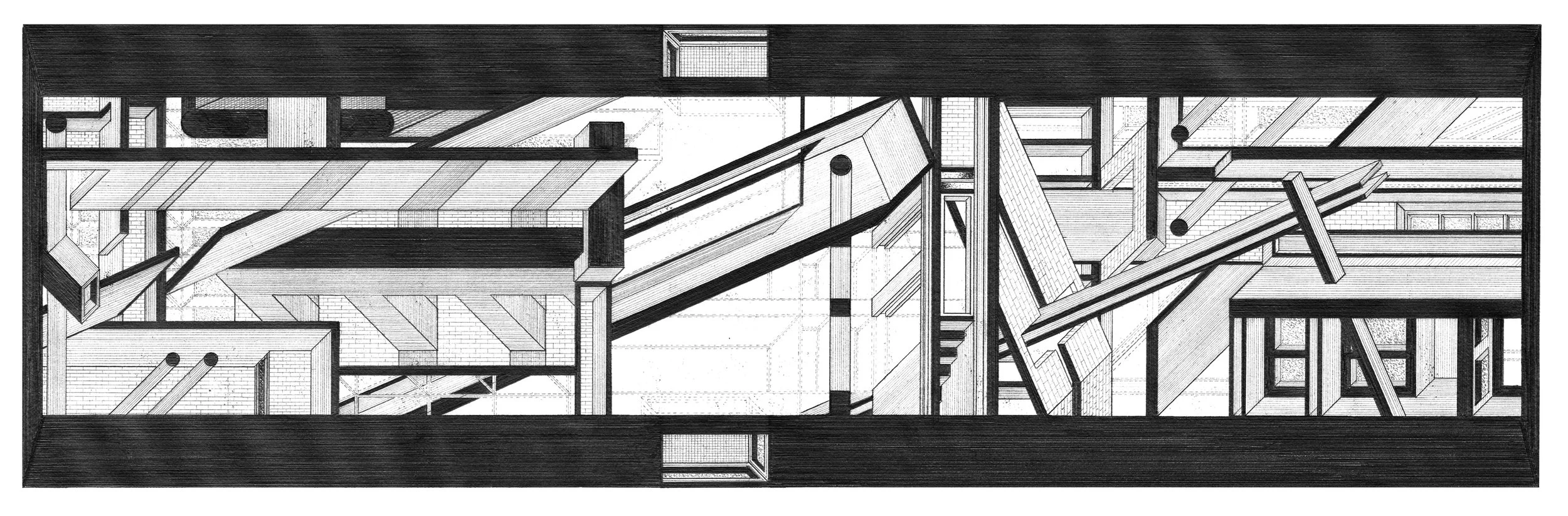
Form Like Christ and His Disciples (2019) Graphite, Paper
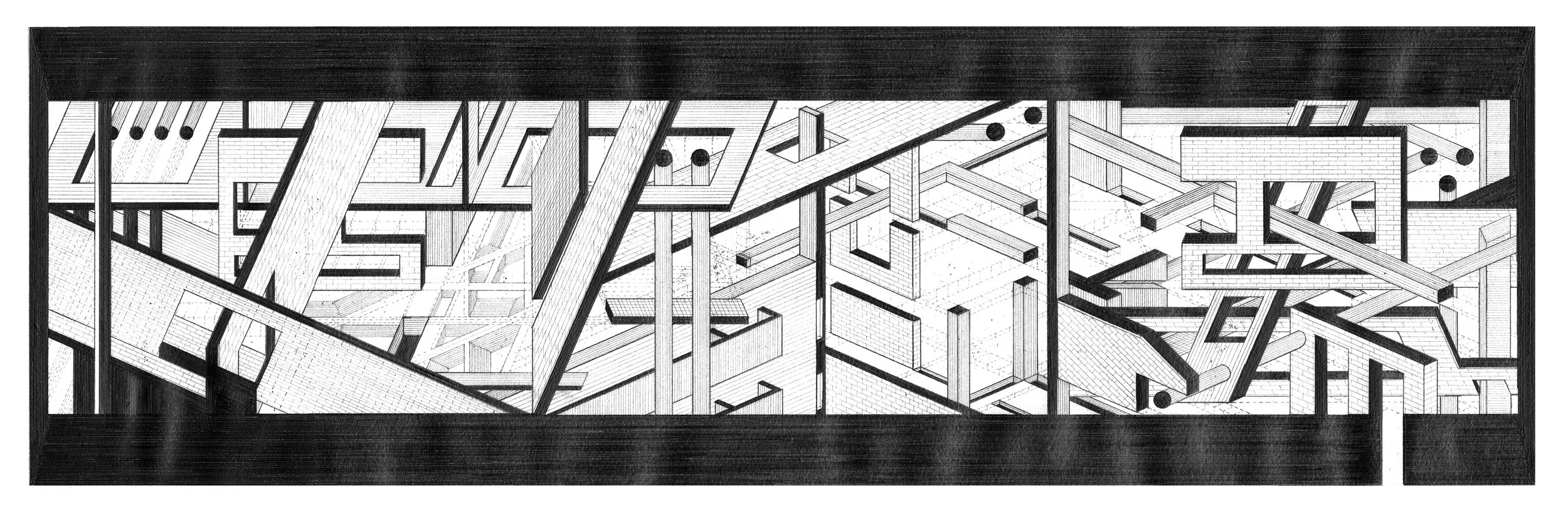
Three Horizons (2019) Graphite, Paper
Square 3 (2019) Graphite, Paper
Square 4 (2019) Graphite, Paper
Fancy a Tab Triptych (Trip, Airport, Langhorn) (2019) Graphite, Paper
LOCUS (2019) Graphite, Paper
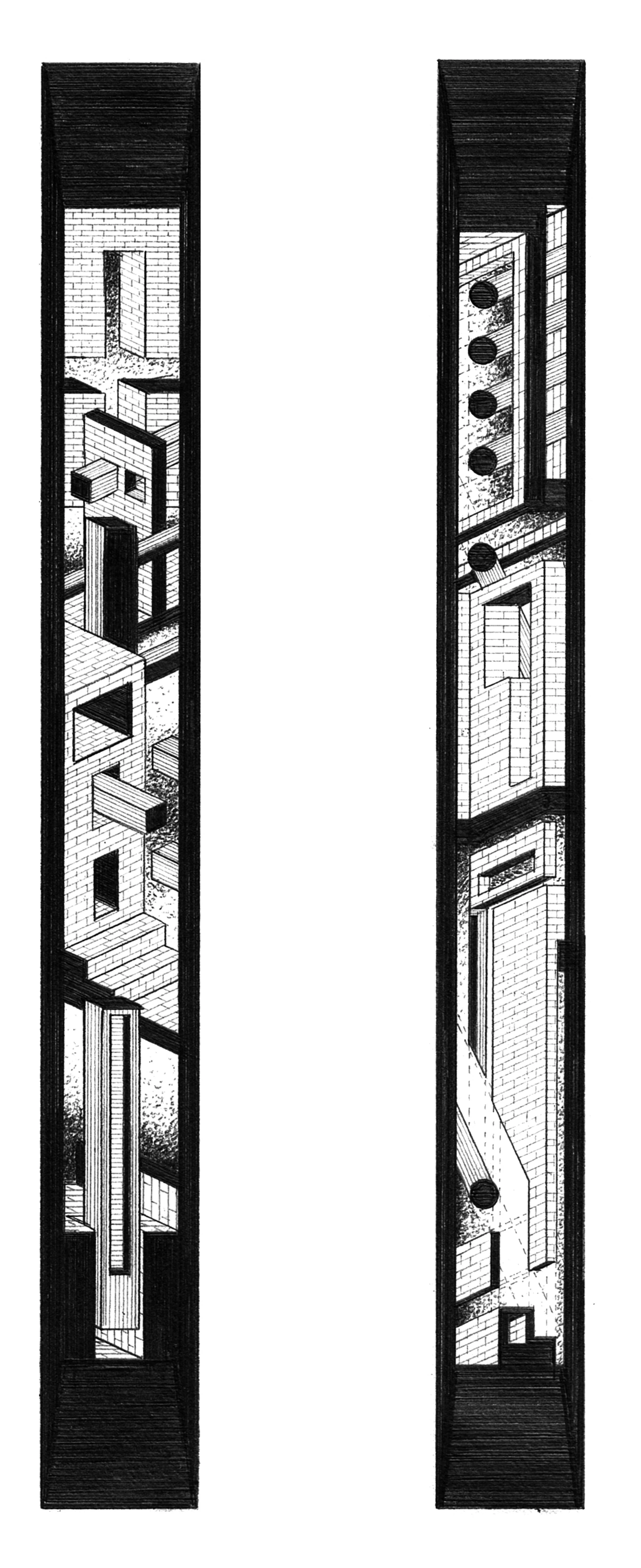
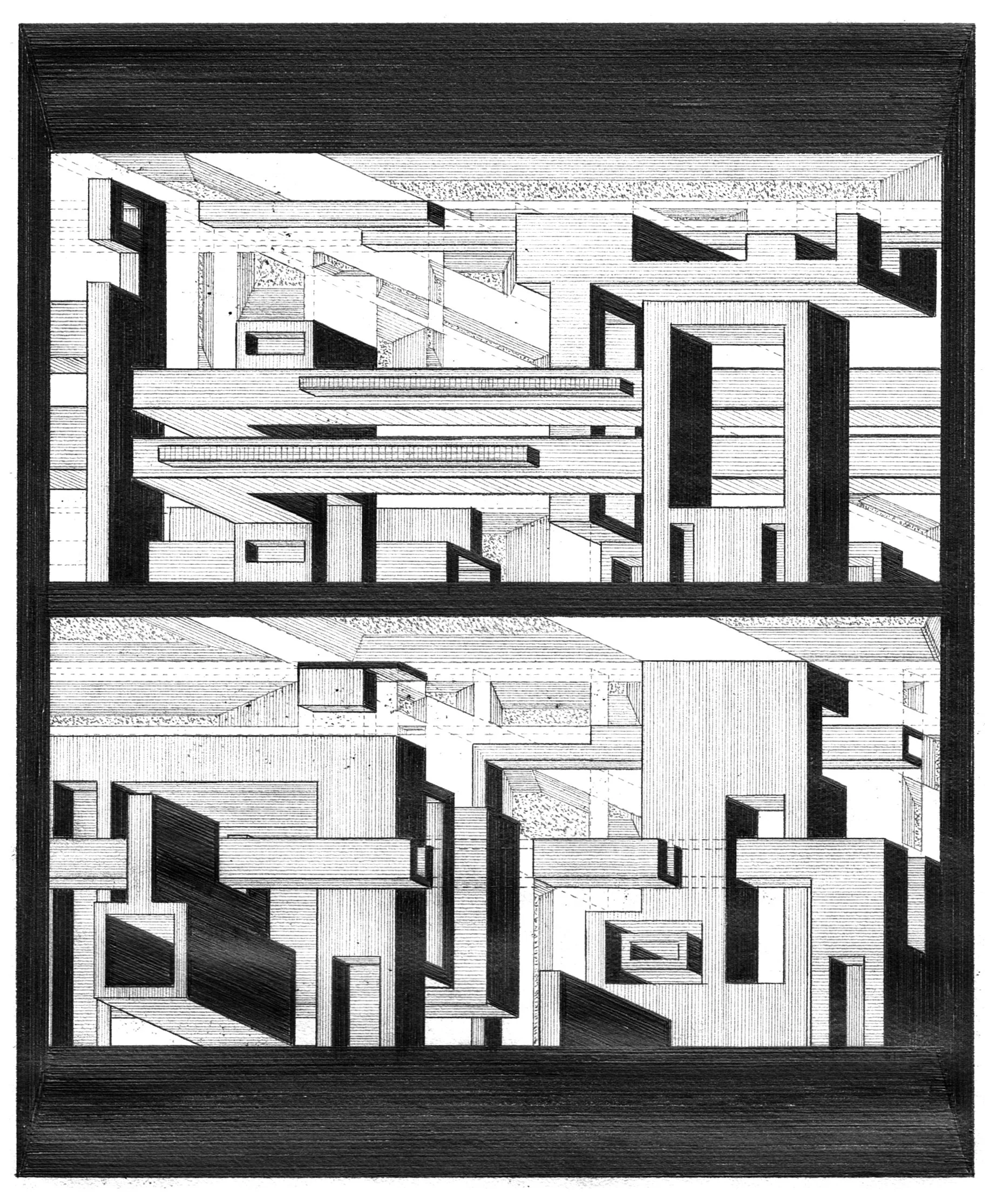
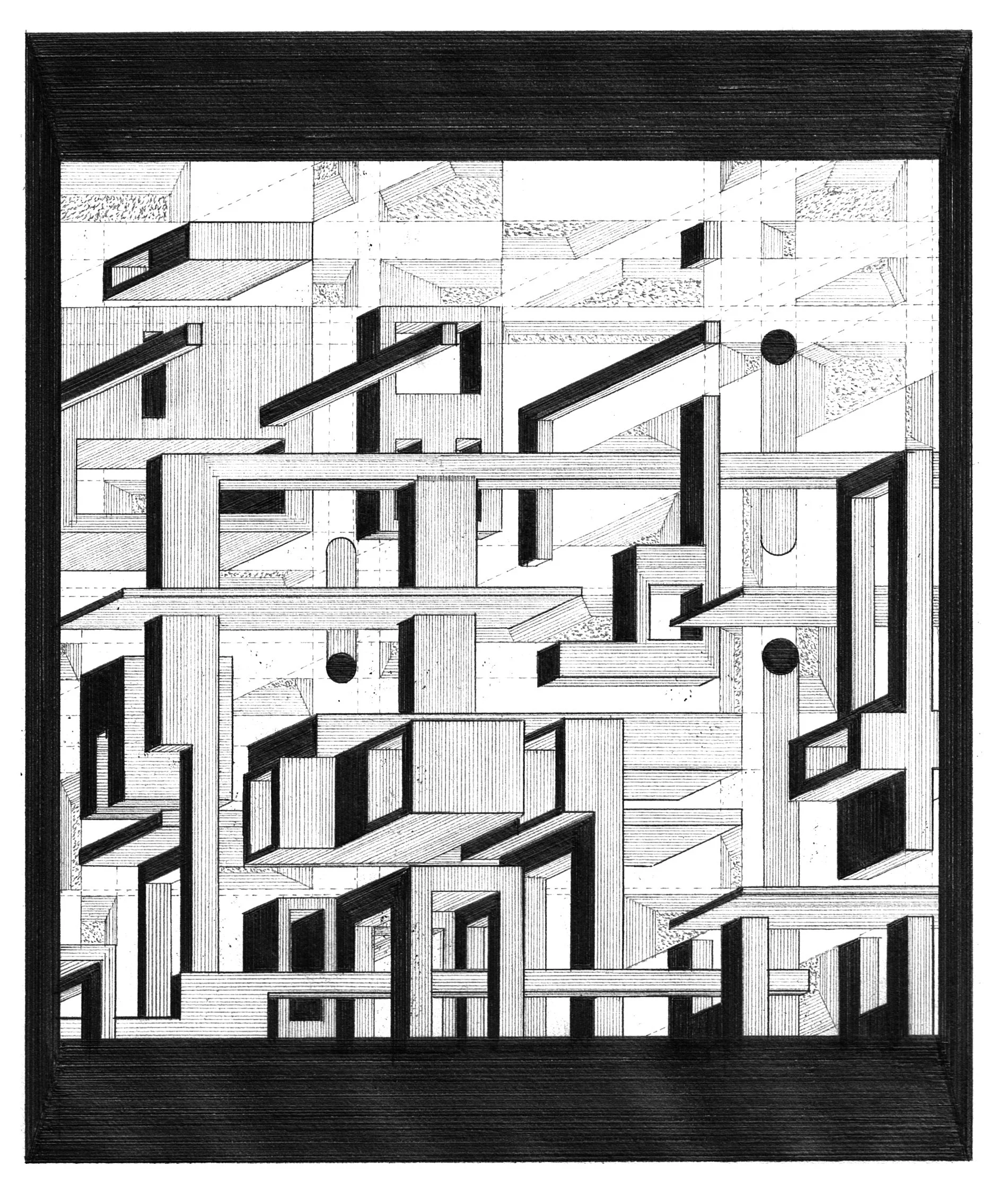
Square 2 (2019) Graphite, Paper
Square 1 (2019) Graphite, Paper
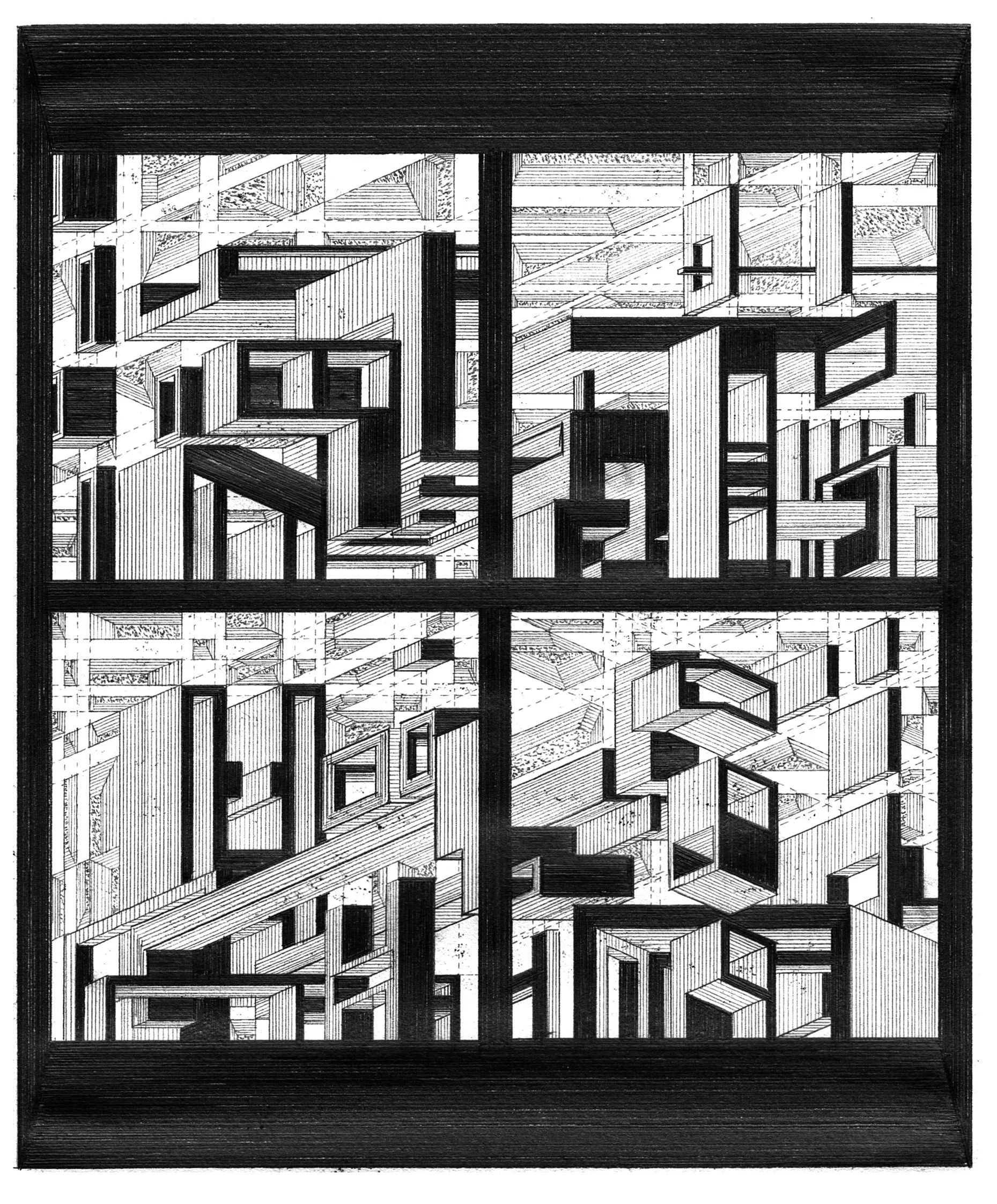
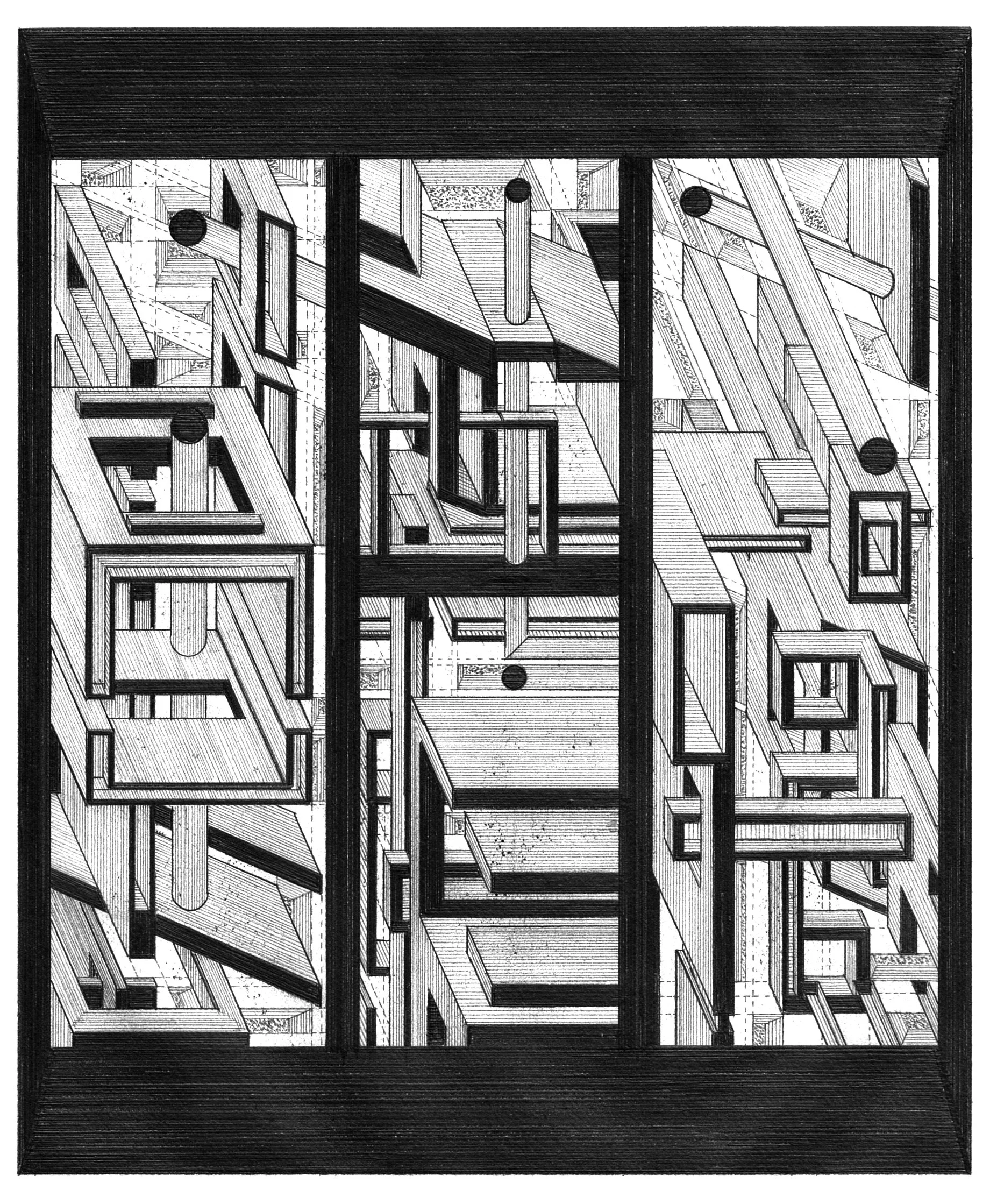
THE AUTONOMOUS
A STUDY INTO HOW THE FRAME CAN CONTROL PERCEPTION AND SPATIAL POSSIBILITY
Testing is a central principle in ’Pataphysics. The Autonomous series takes this as a starting point, examining how the frame shapes embodied perception and the act of drawing.
-
Whether it is the edge of the paper, the limits of the surface, or the implied space beyond it, the frame remains an inescapable condition. These drawings work with and against that presence, introducing additional frames that impose new constraints. Within this structure, an axonometric language of chance is set into tension with control.
Here, both line and eye are directed and contained, making composition the dominant spatial force. Rather than limiting the work, these constraints create the conditions for disruption—moments where the unexpected begins to emerge.
France and the Wall (2019) Graphite, Paper
Door Bar (2019) Graphite, Paper
Form Like Christ and His Disciples (2019) Graphite, Paper
Three Horizons (2019) Graphite, Paper
Square 3 (2019) Graphite, Paper
Square 4 (2019) Graphite, Paper
Fancy a Tab Triptych (Trip, Airport, Langhorn) (2019) Graphite, Paper
LOCUS (2019) Graphite, Paper
Square 2 (2019) Graphite, Paper
Square 1 (2019) Graphite, Paper
A SEARCH FOR TECTONICS
DRAWINGS THAT CONSTRUCT SPACE BEYOND THE LIMITS OF THE FRAME
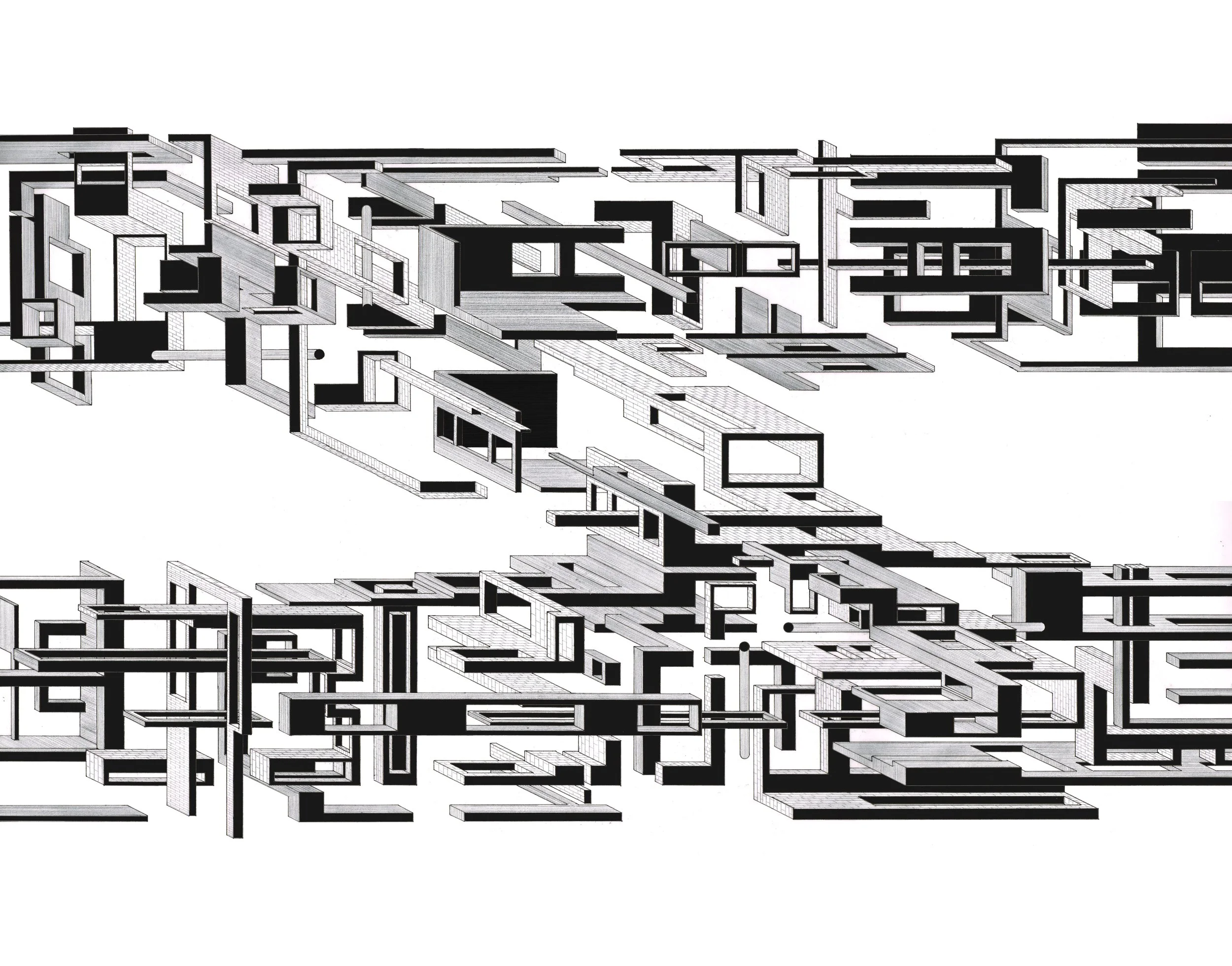
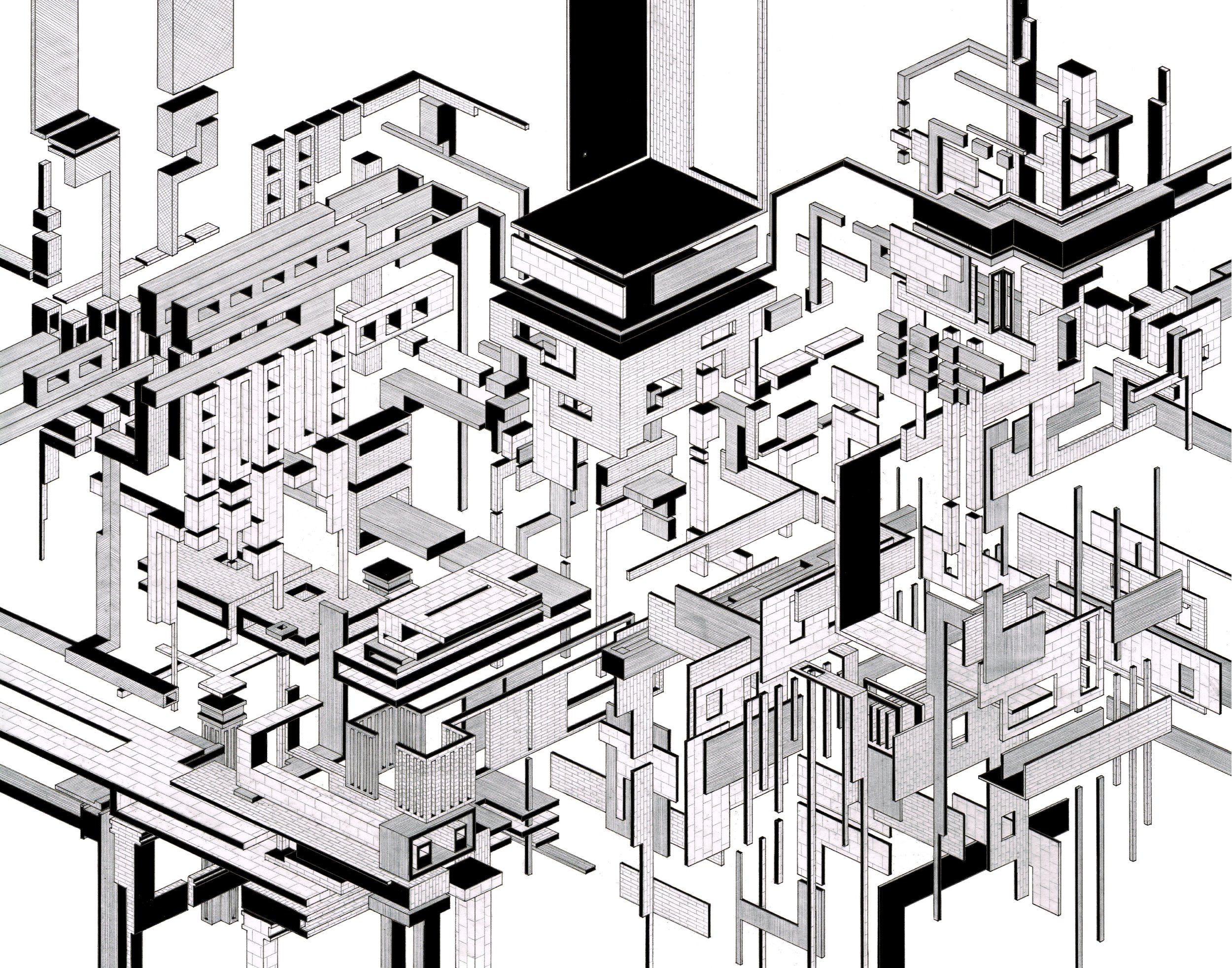
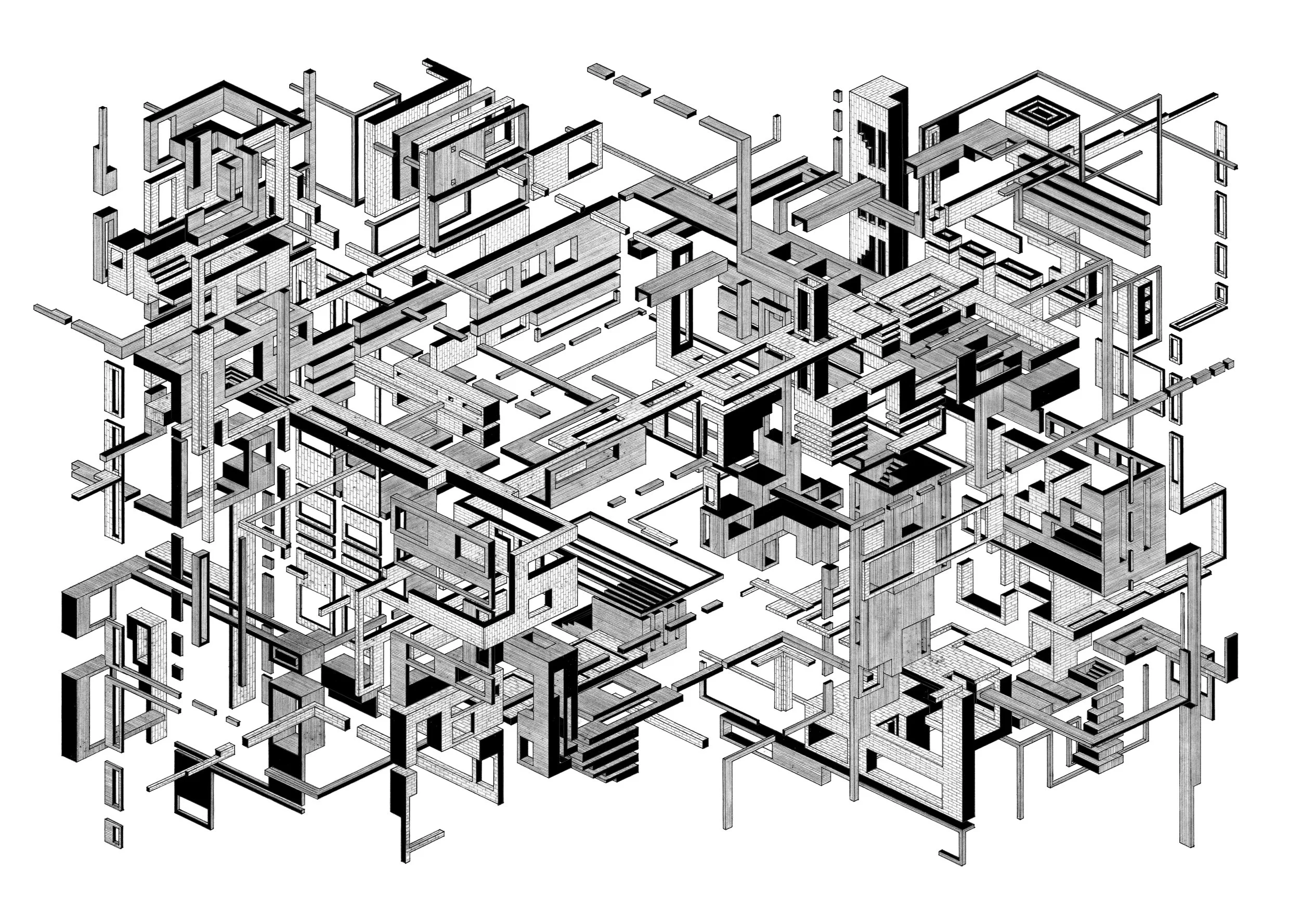
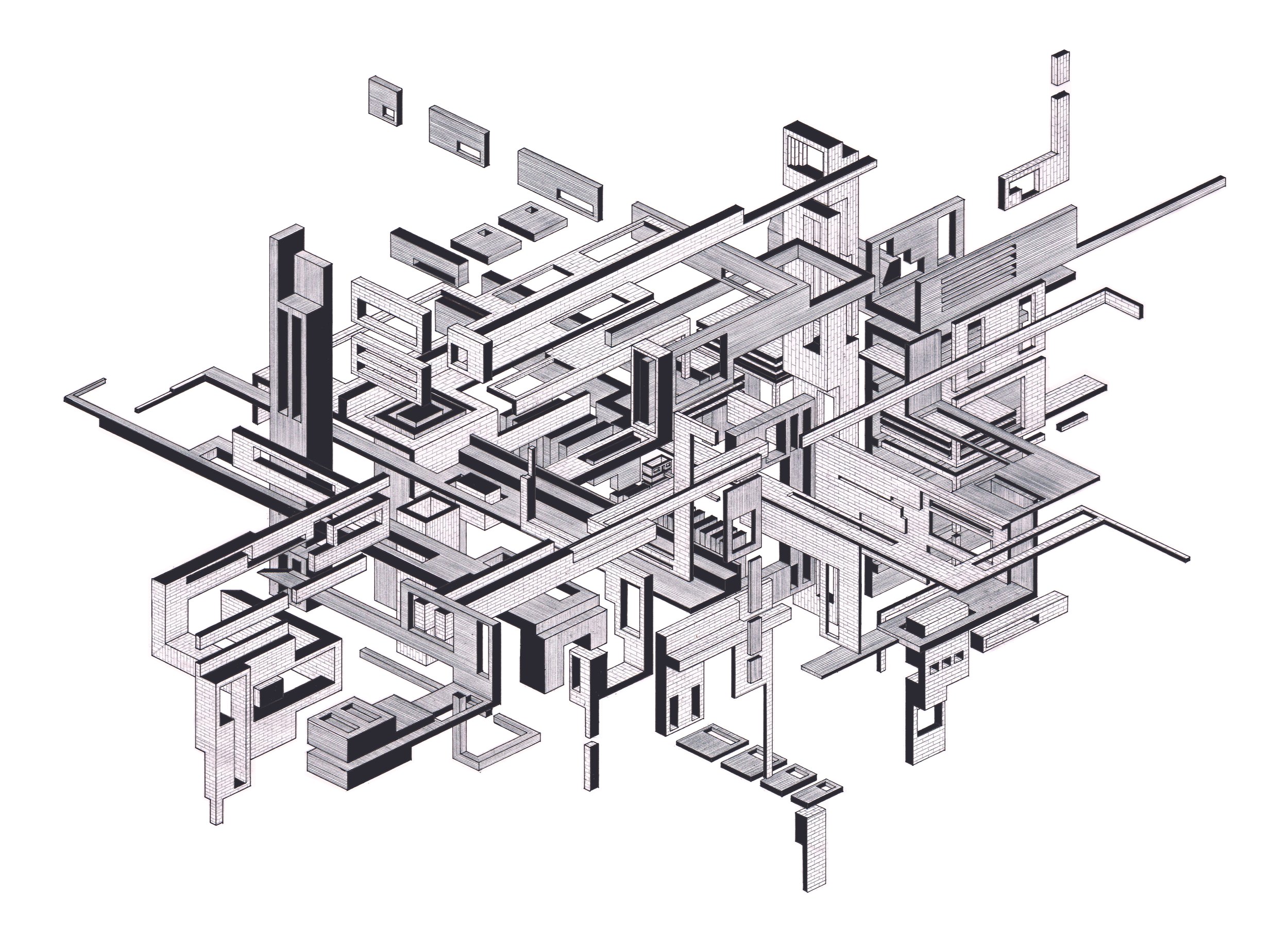
If The Autonomous series explores projection under constraint, the A Search for Tectonics series begins pushing beyond it, allowing the drawings to construct their own spatial logic.
-
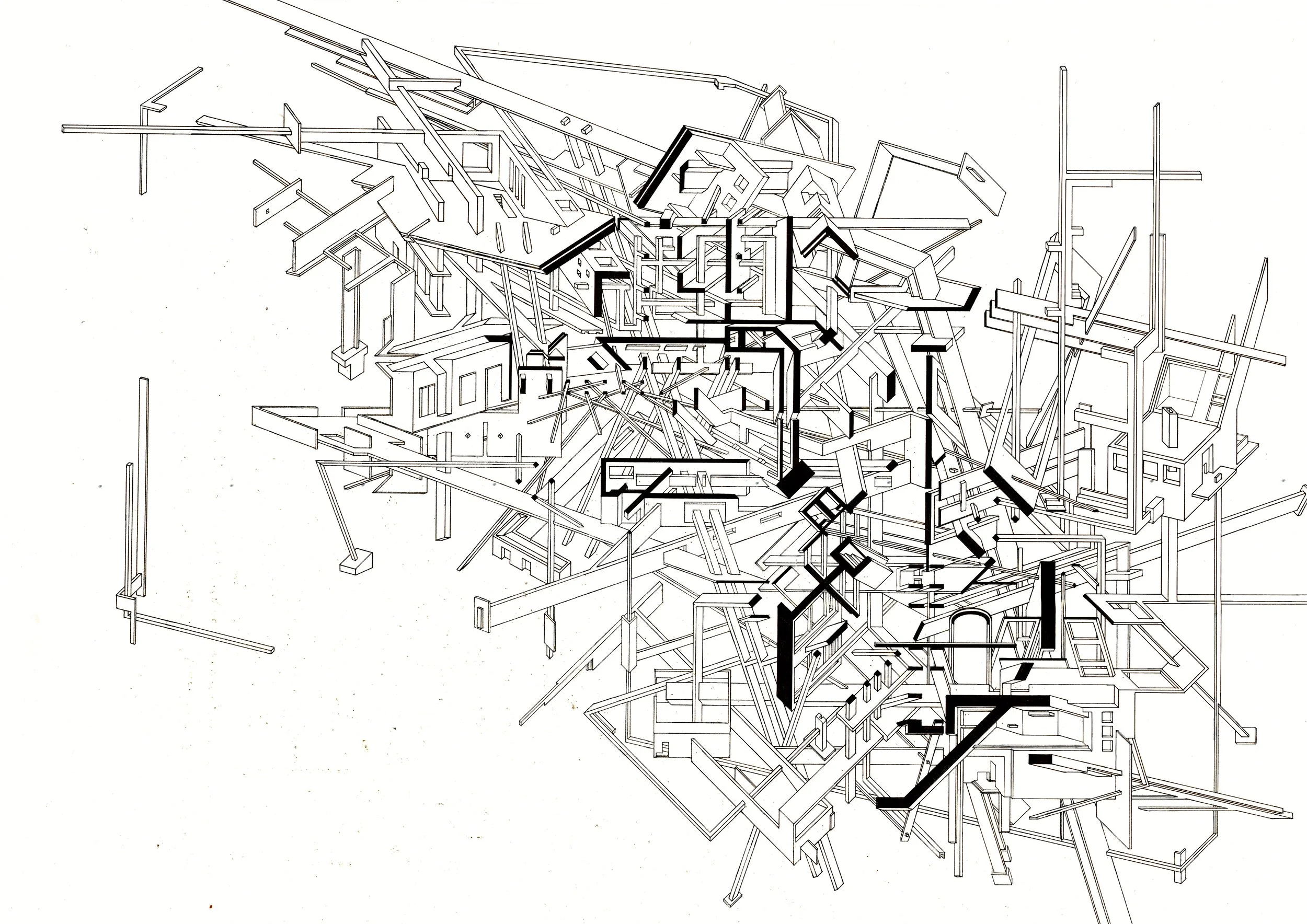
Each work starts without a fixed aim, emerging in response to a blank surface and the underlying structure of axonometric projection. From this, geometric inconsistencies and moments of visual rupture begin to surface, forming spatial conditions that suggest the potential for embodied, material experience.
The resulting networks are at once precise in their construction and unstable in their outcome, shifting a visual language of measurement toward one of uncertainty.
Chimney (2020) Ink, Graphite, Paper
Facade . (2020) Ink, Graphite, Paper
Two Horizons (2020) Ink, Graphite, Paper
Italy (2020) Ink, Graphite, Paper
Projection (2020) Ink, Graphite, Paper
Circulation Strategy (2020) Ink, Graphite, Paper
THE DIALECTICAL COMPUTER
A COLLABORATIVE SYSTEM WHERE AUTONOMY AND EXTERNAL INFLUENCE COLLIDE
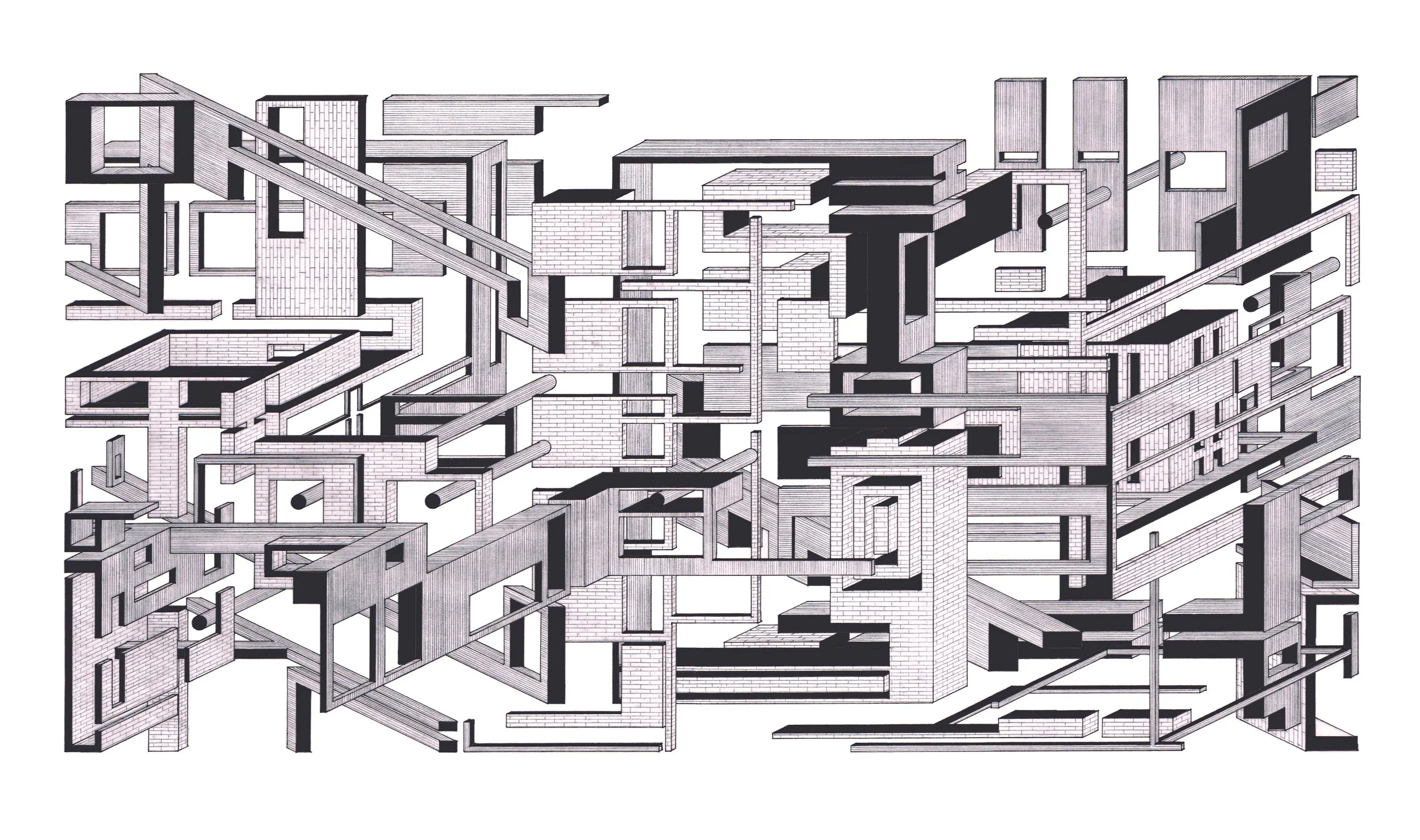
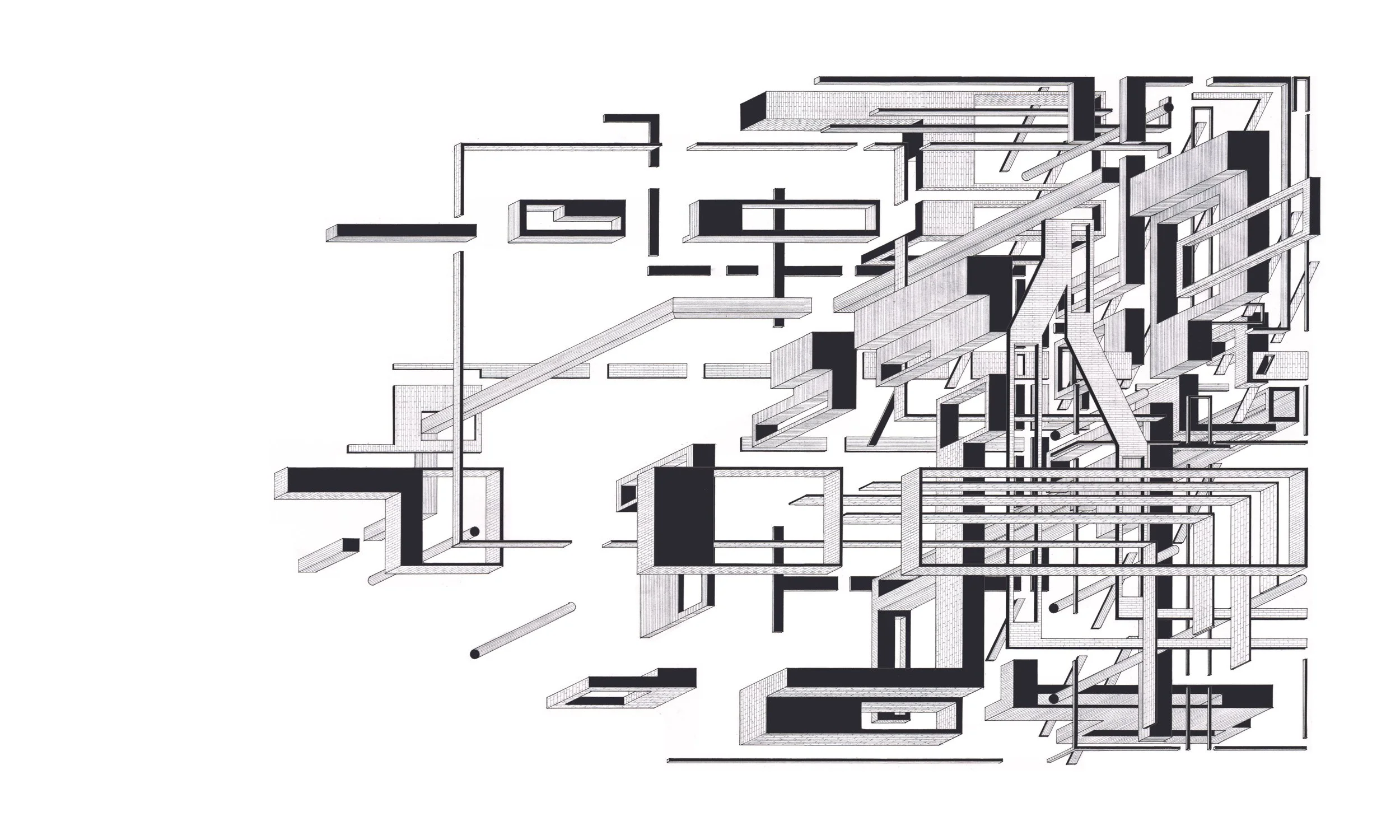
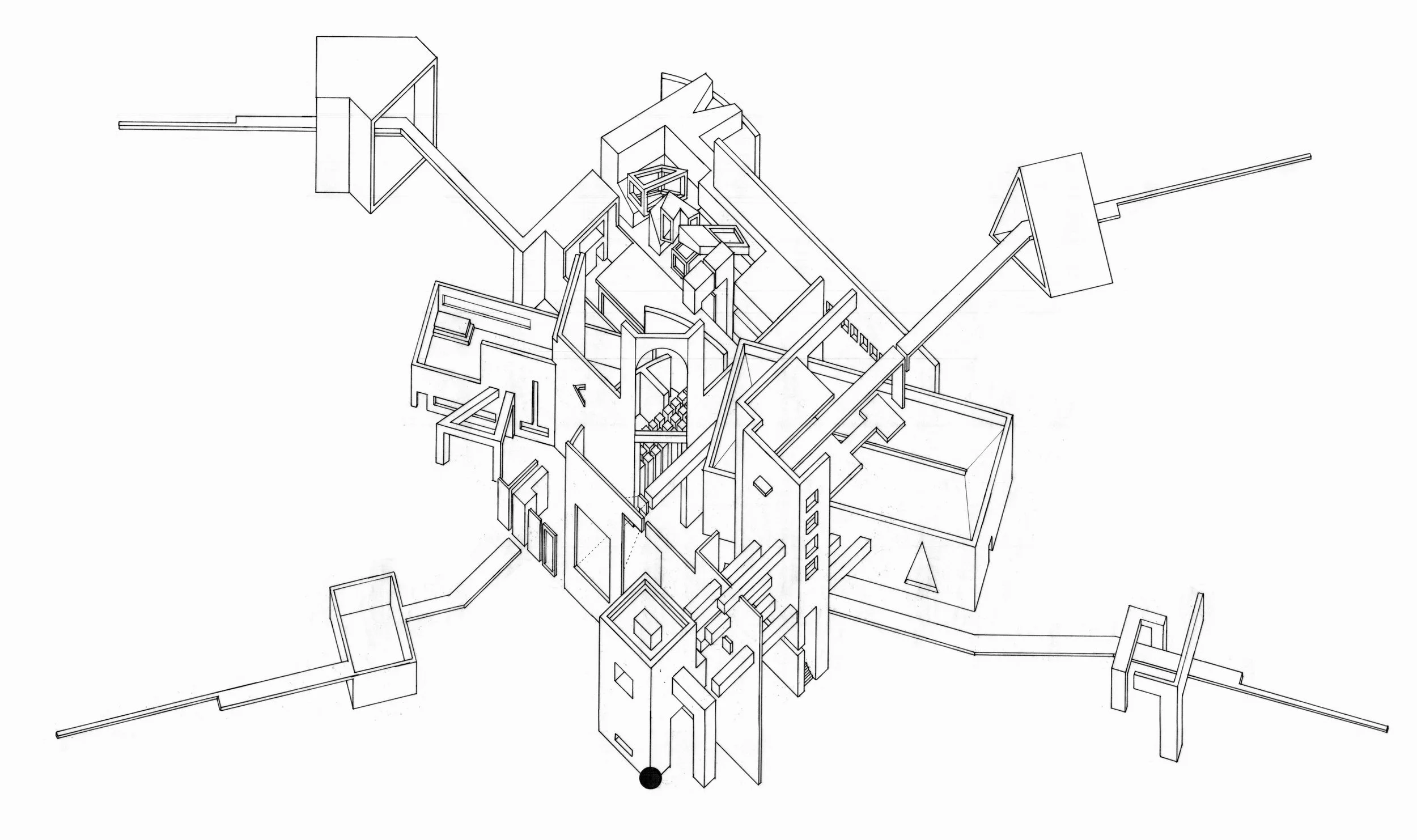
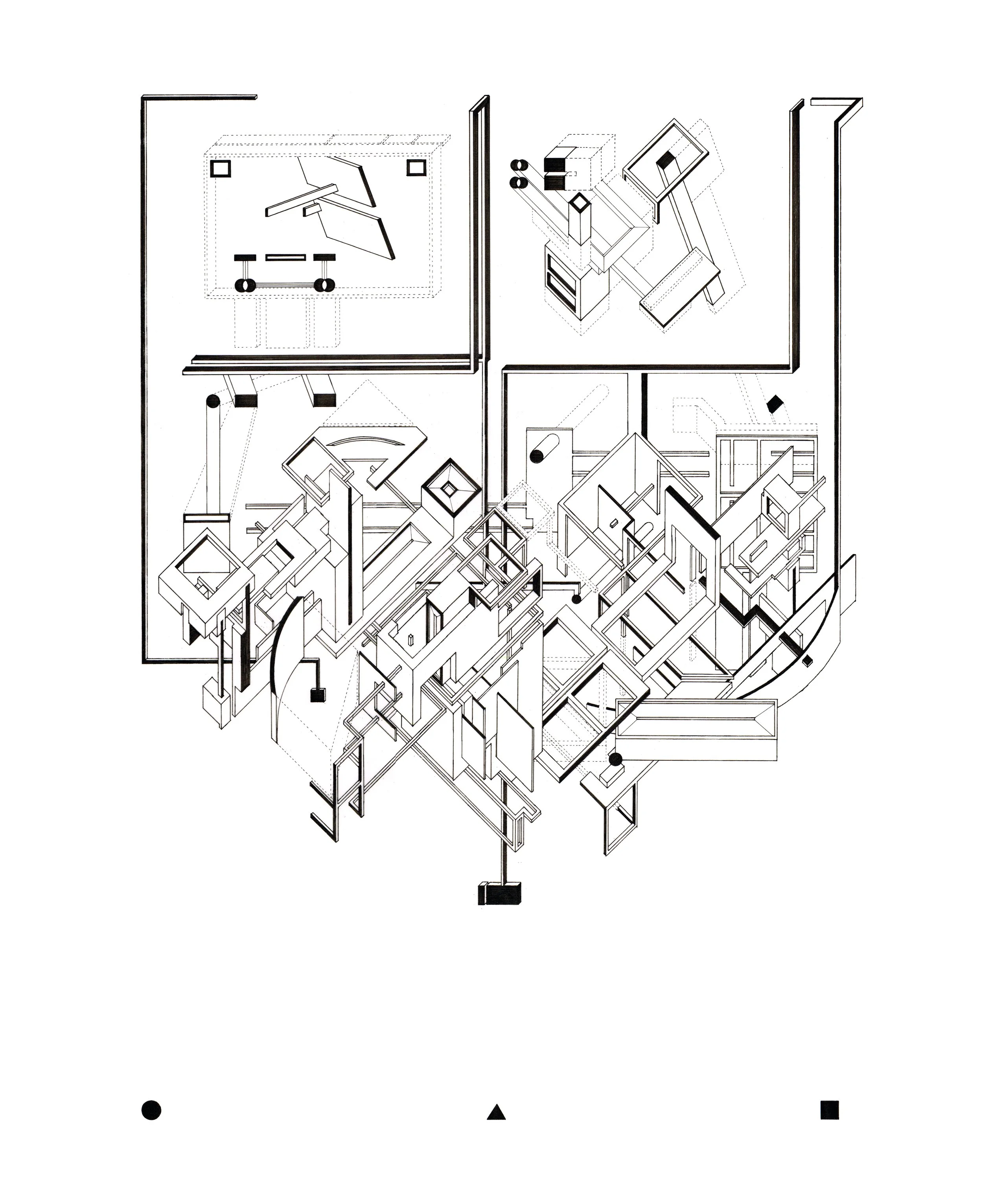
The Dialectical Computer series is a collaboration with Dr Alex Blanchard, where two distinct practices are brought into deliberate friction. This encounter introduces a productive instability, allowing a shared visual language to emerge through tension rather than resolution. All works presented here are by David Boyd.
-
Through this process, a set of geometric fragments begins to form, translating signs and symbols from an external visual script into a space of tectonic projection. Some elements operate as mappings of movement—tracking temporal shifts and spatial rotations—while others register rhythm, translating spatialised sound into structure.
This series questions the systems desire to resist external reference. By introducing an outside condition, the drawings test whether this resistance is a limitation rather than a generative principle.
Instead of functioning as an instruction or blueprint, these references remain open to misinterpretation. The act of drawing becomes a negotiation between invention and influence, where external inputs disrupt and redirect the desire for complete autonomy.
Maria (2021) Ink, Paper
8 Squares (2021) Ink, Paper
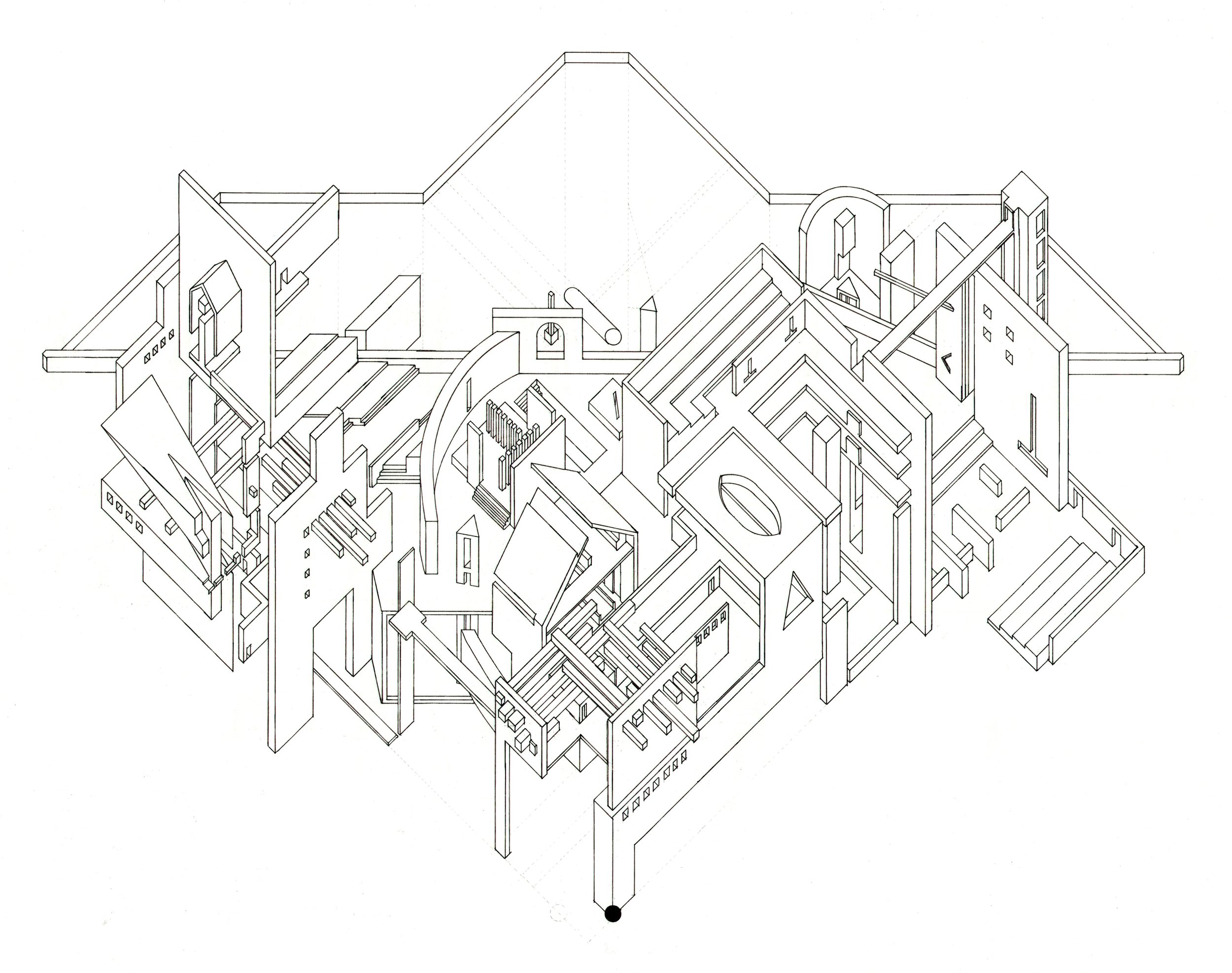
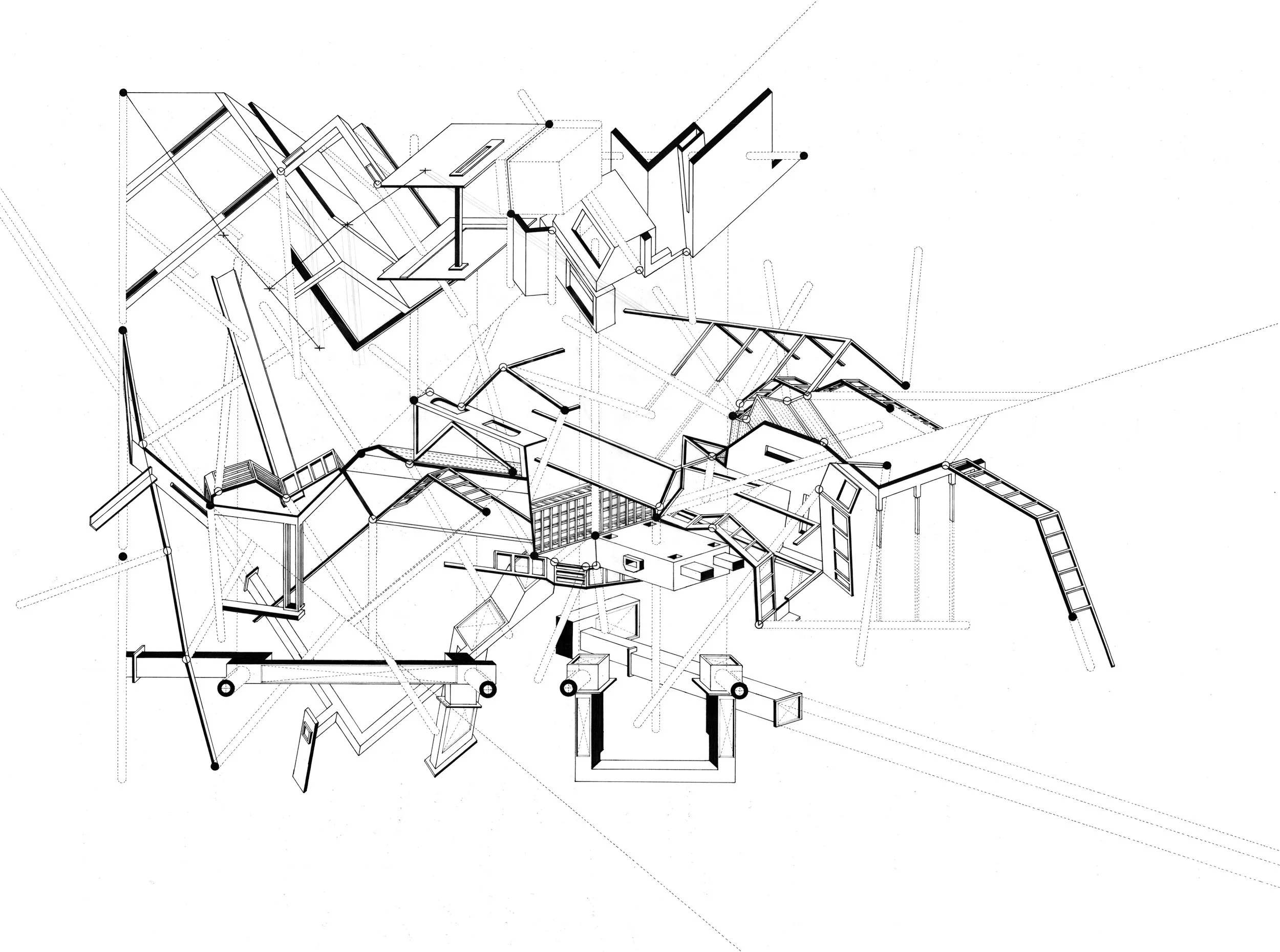
Sorry Christos (2021) Ink, Paper
Survey (2021) Ink, Paper
BAR SEQUENCE
PARALLEL PROJECTION COMPRESSED BEYOND PRECISION INTO INSTABILITY
Axonometry and isometry are widely used as technical tools, often reducing projection to a language of precision and control. The Bar Sequence series works against this tendency, reconfiguring parallel projection through an iterative process of visual compression that rejects accuracy in favour of possibility.
-
Each drawing tests the relationship between projection and the ’Pataphysical conditions of uncertainty and fallibility. Through the tension between repetition and variation, the compositional system produces moments where structure gives way to inconsistency.
In this series, the assumed stability of parallel projection is unsettled. What is typically understood as factual and measurable becomes open to disruption, exposing the potential for misuse, ambiguity, and invention within a rigid visual framework.
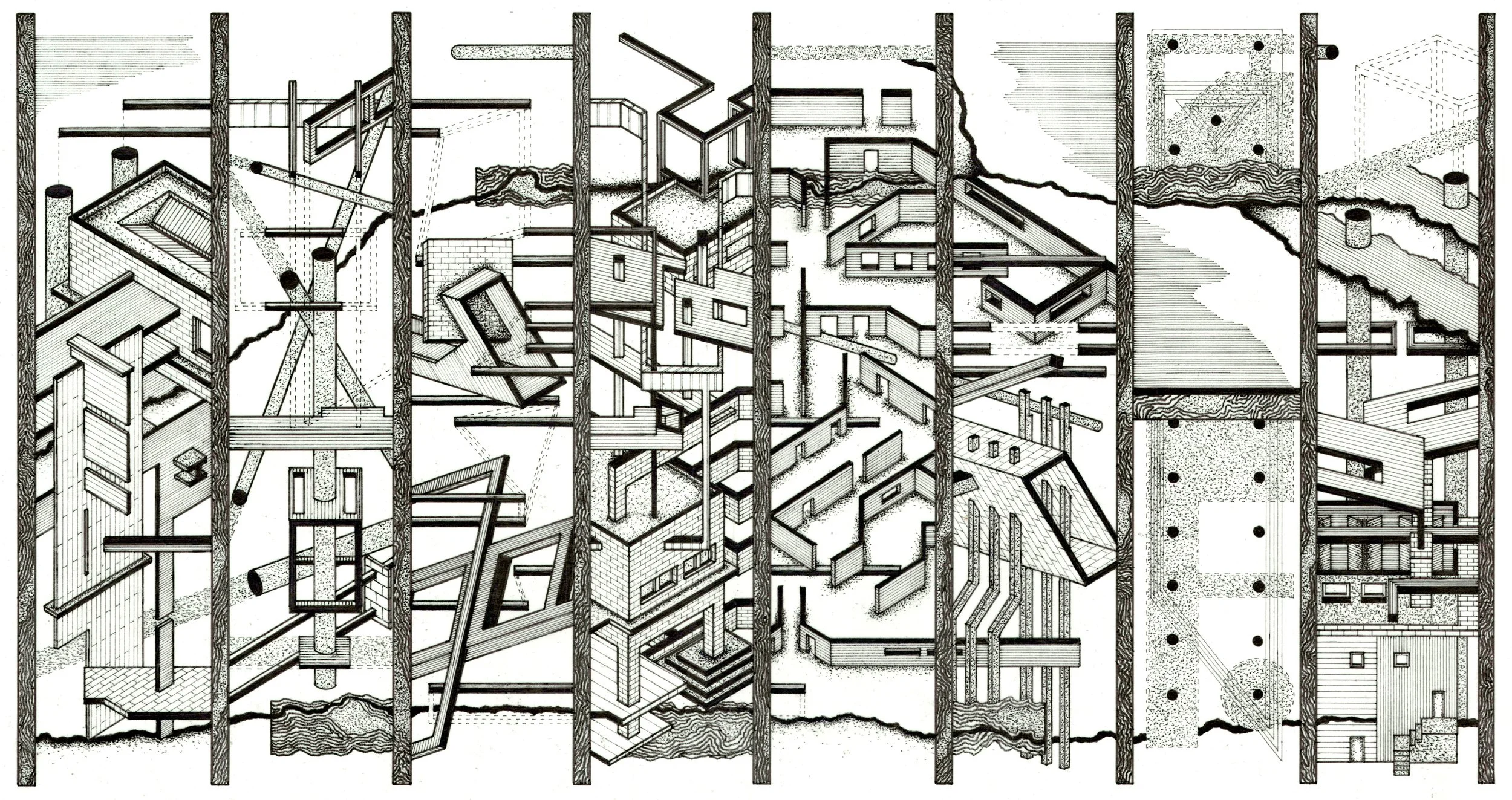
8 Bar (2026) Ink, Paper
HOME
RECONSTRUCT THE INSTABILITY OF MEMORY
The Home series draws from existing places, not as surveys, but as spaces reimagined through the instability of memory. These drawings emerge through acts of misremembering, where fragments of the past are translated into uncertain, shifting conditions.
-
In this process, both a past state and a possible future begin to surface, with inaccuracy becoming the central generative catalyst. The work treats memory not as a record, but as a site of transformation.
These themes resonate with ’Pataphysical thinking, as well as ideas explored in early Dadaism and Surrealism, where misinterpretation and distortion become tools for invention.
JSNE (2025) Ink, Paper
Tyneside Flat No.1 (2022) Ink, Graphite, Paper
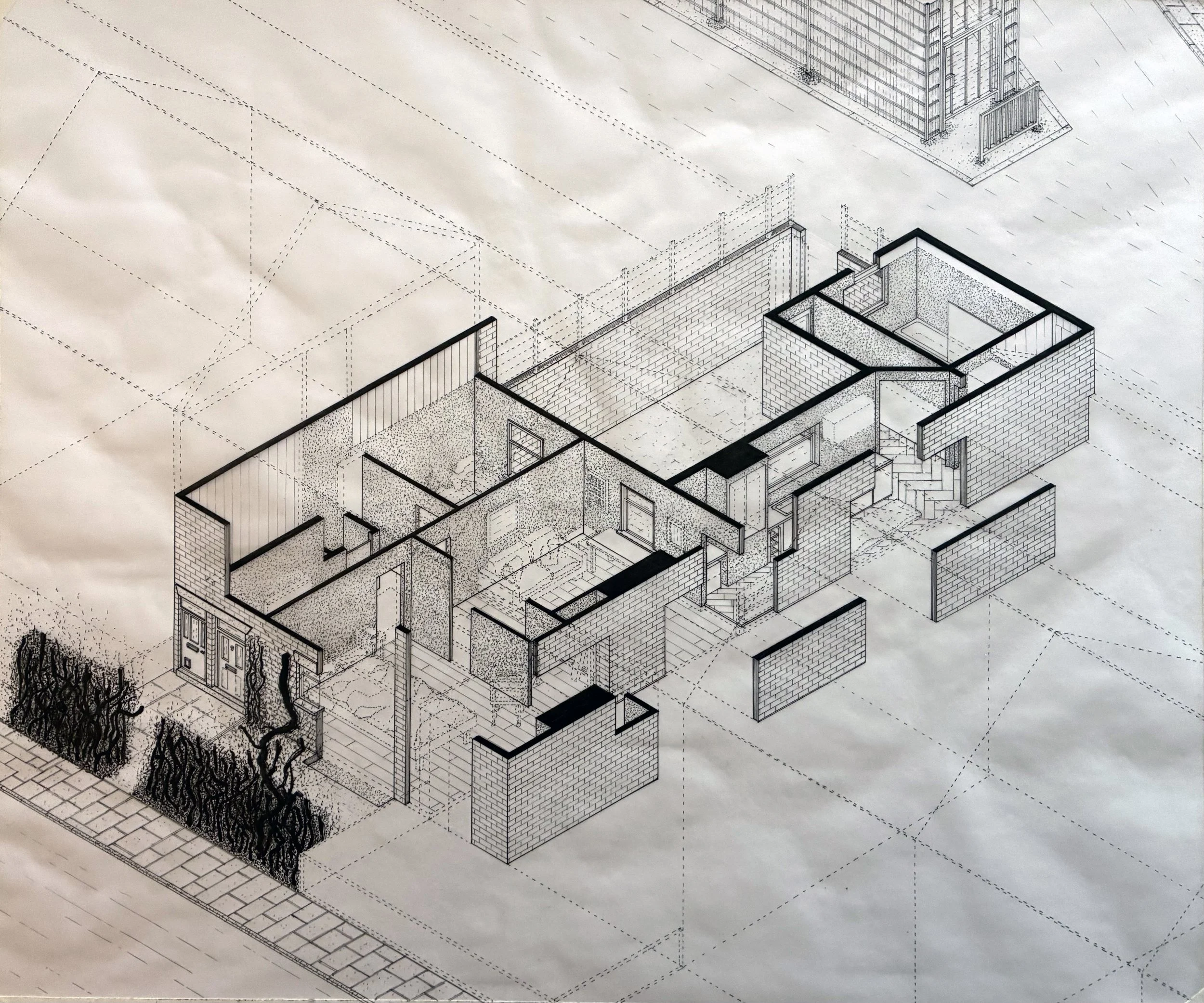
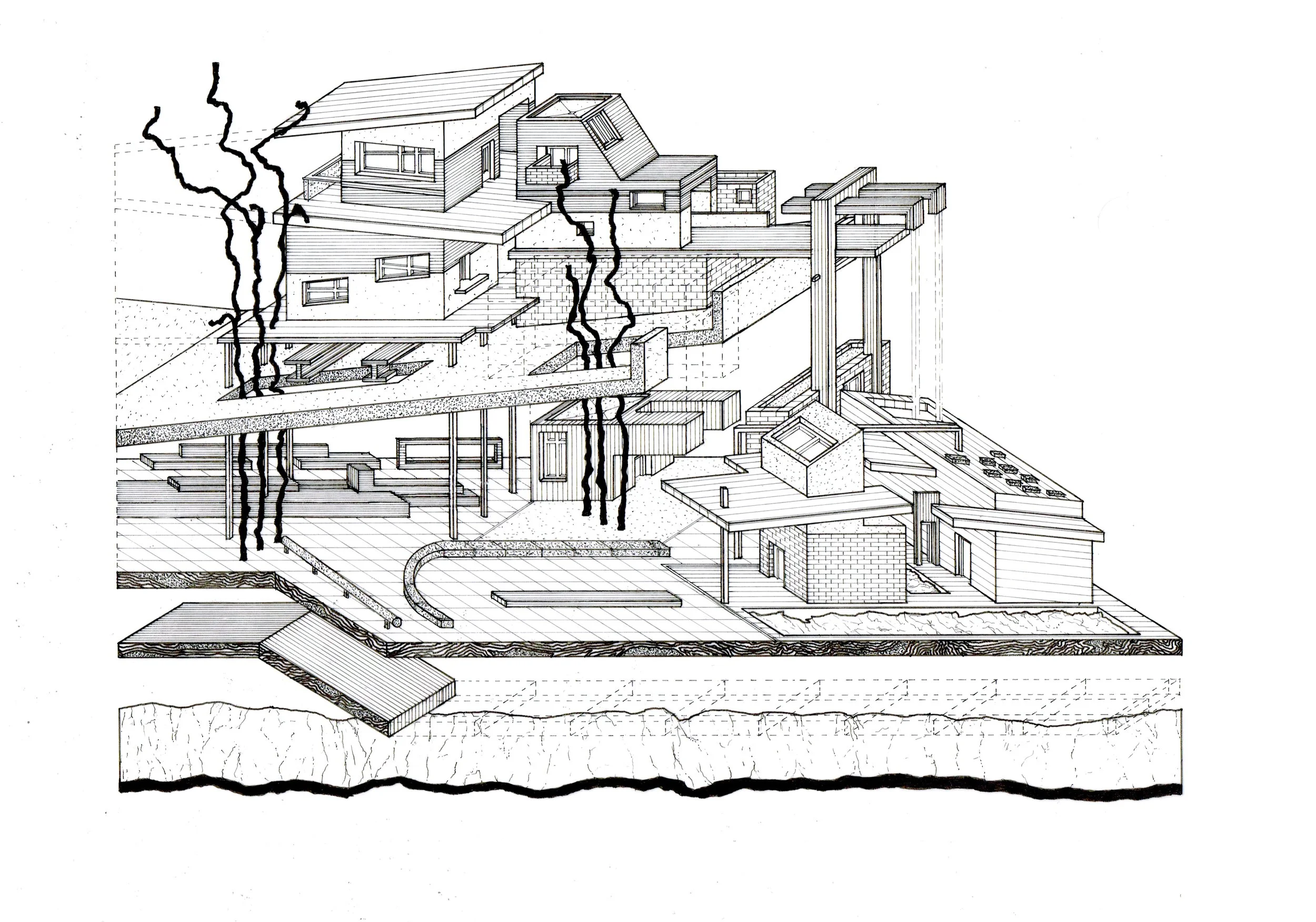
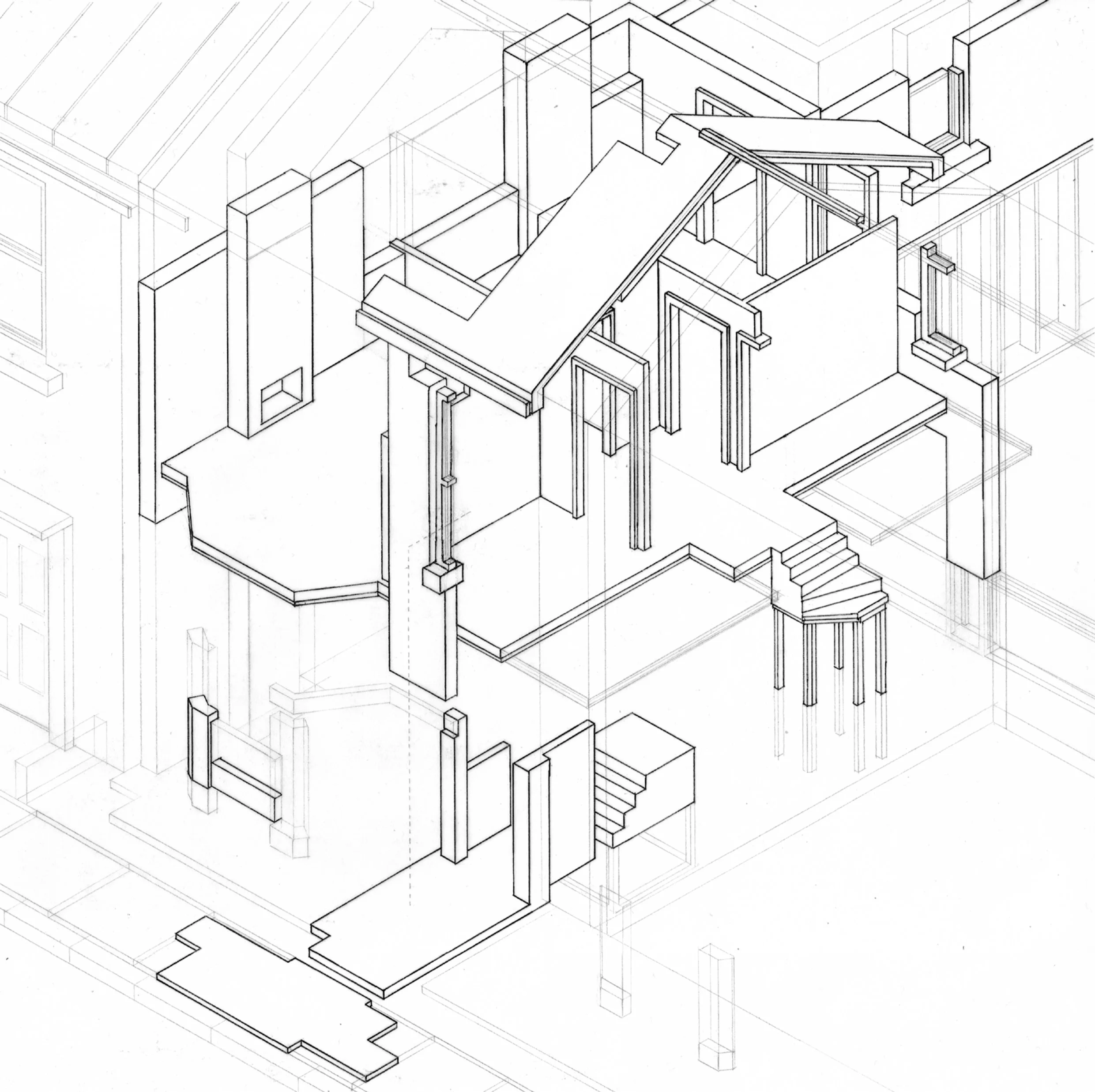
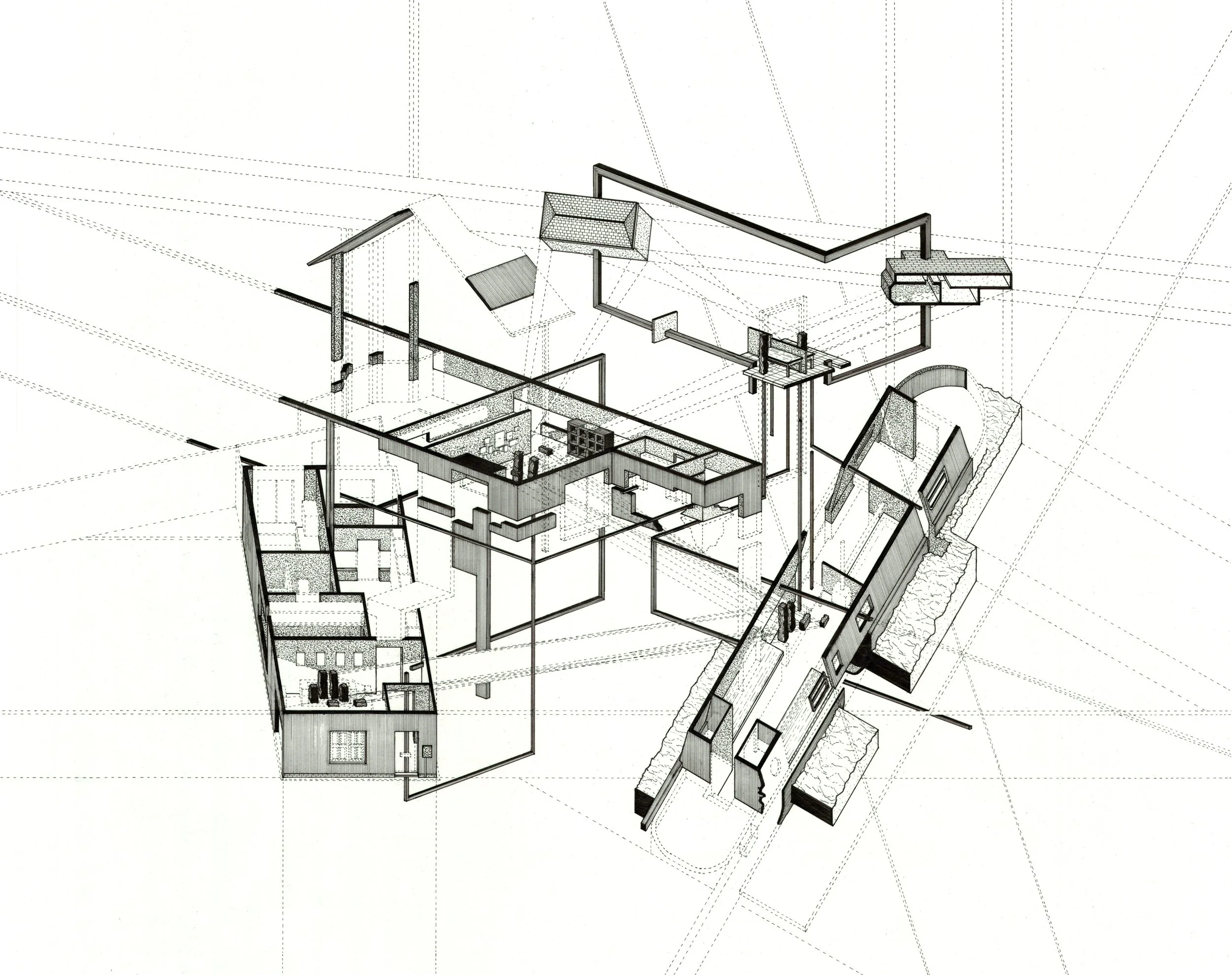
Tyneside Flat: Speculation (2025) Ink, Paper
Tyneside Flat No. 2 (2026) Ink, Paper
MORPHOLOGIES
FRAGMENTS THAT THAT ARE SUSPENDED BETWEEN CONTROL AND INCOMPLETION
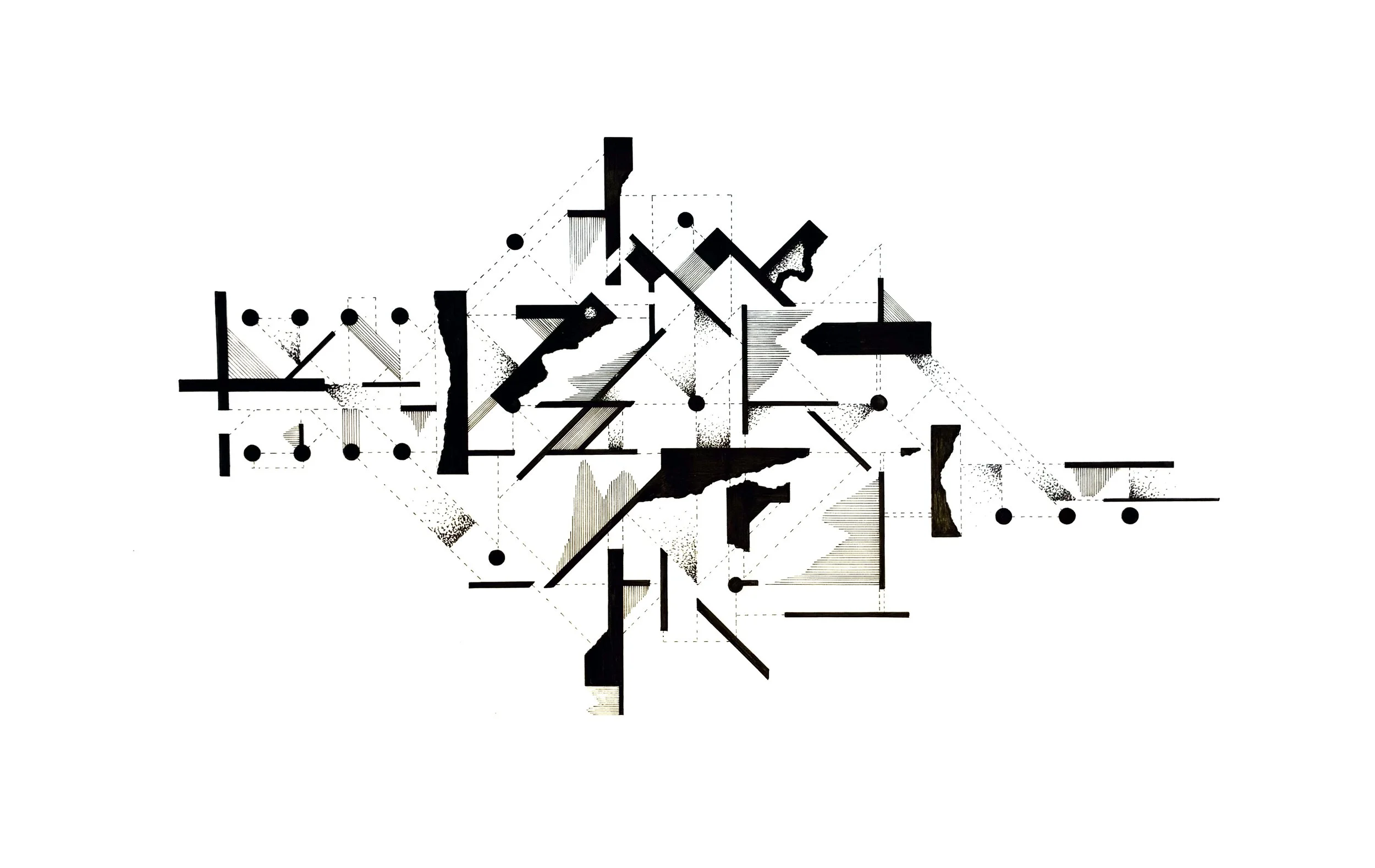
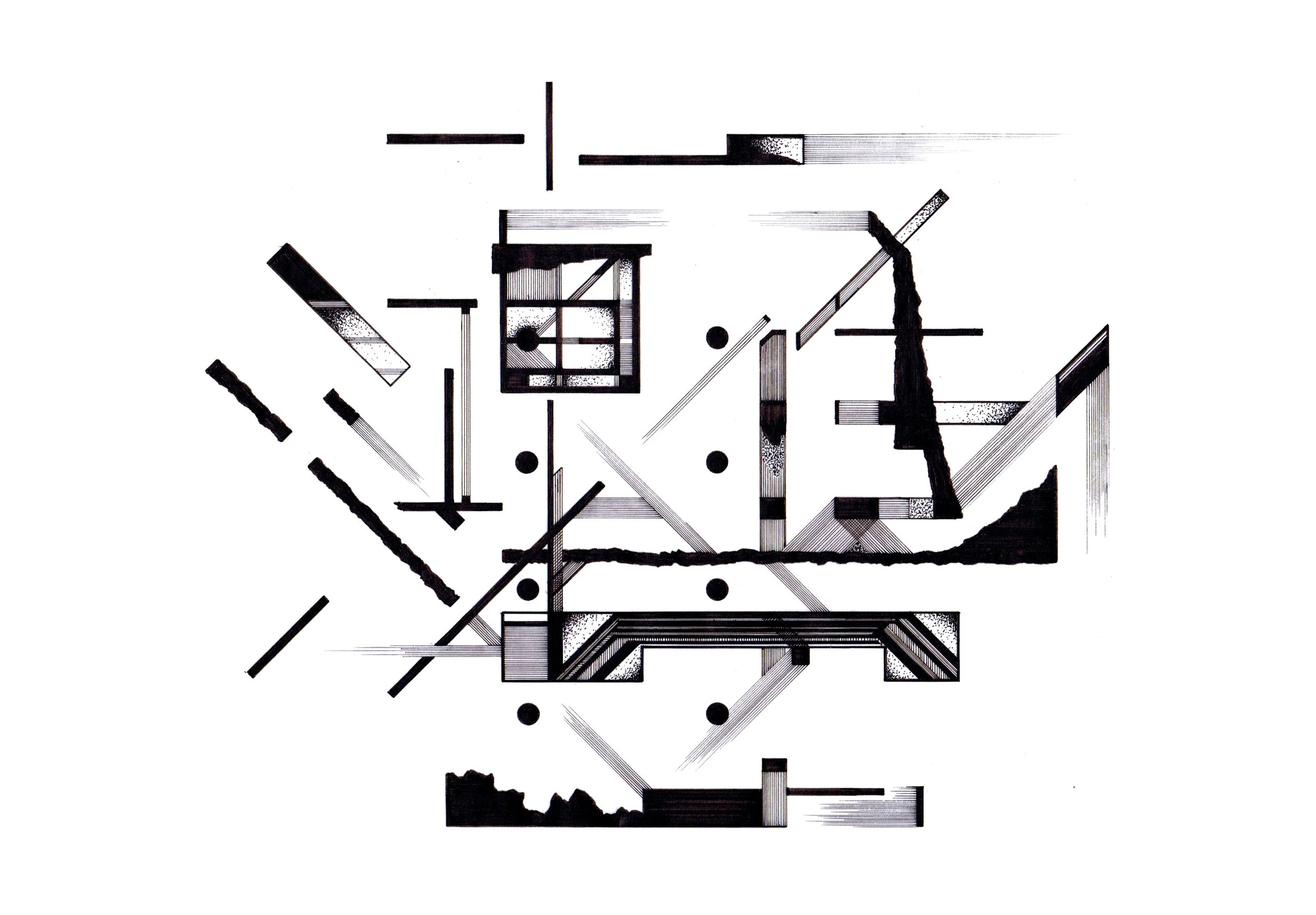
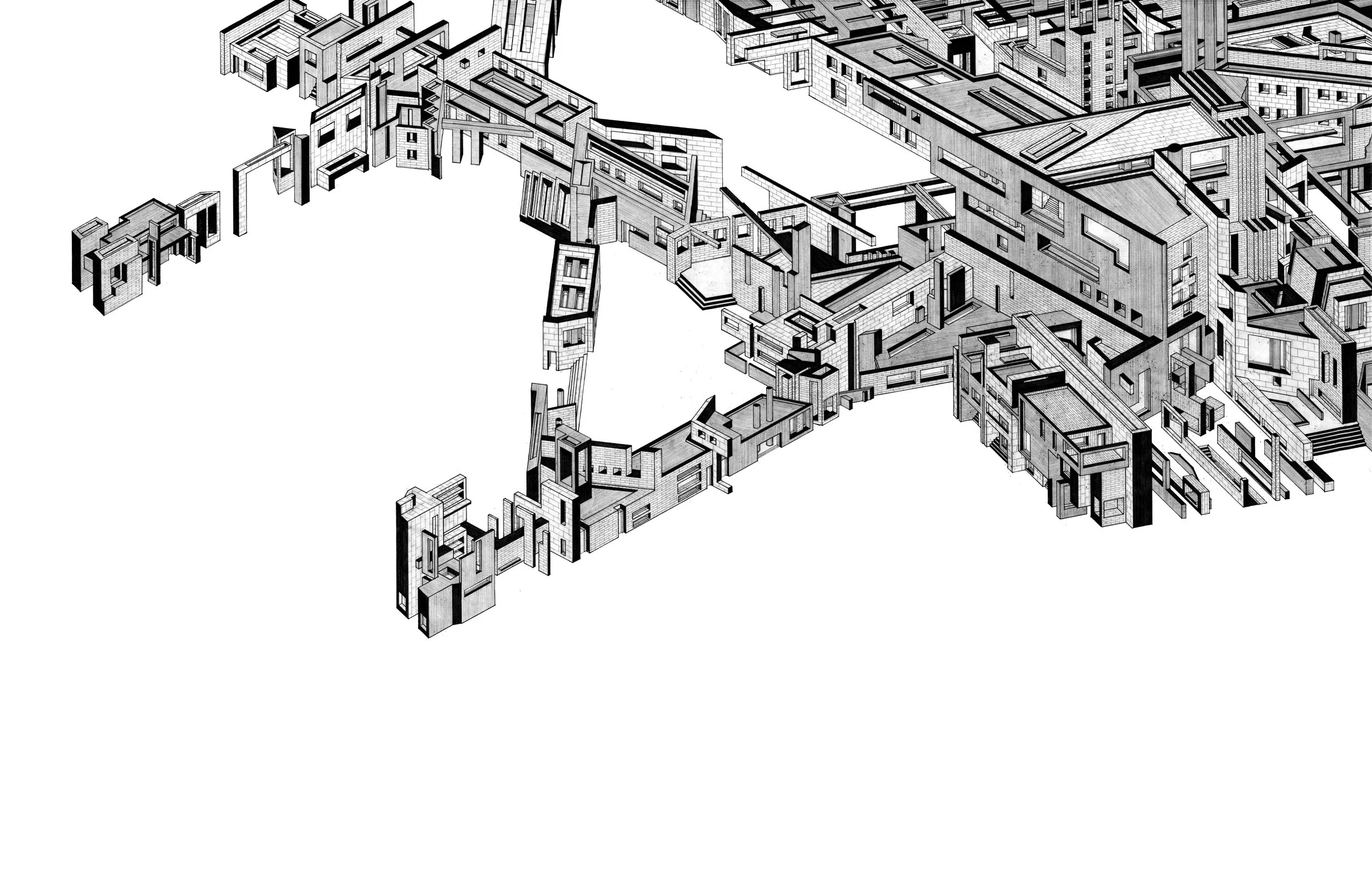
The Morphologies series responds to geometric restriction and compositional control. Each drawing exists as a fragment of something larger and ultimately unresolvable. Lines resist gravity and detach from any stable ground, suspending the work in a state of compositional stasis.
-
Unlike other studies, such as Quirinal Palace, this series does not seek to explore material connection or structural binding. Instead, it accepts composition as the primary condition. Here, composition is not a limitation, but the central generative force—one that enables new forms of spatial invention to emerge.
Pink Lane (2025) Ink, Paper
Hustlers (2026) Ink, Paper
QUIRINAL PALACE
INTERROGATE DRAWING TO INFILTRATE AND RECONFIGURE HIERARCHICAL SPACE
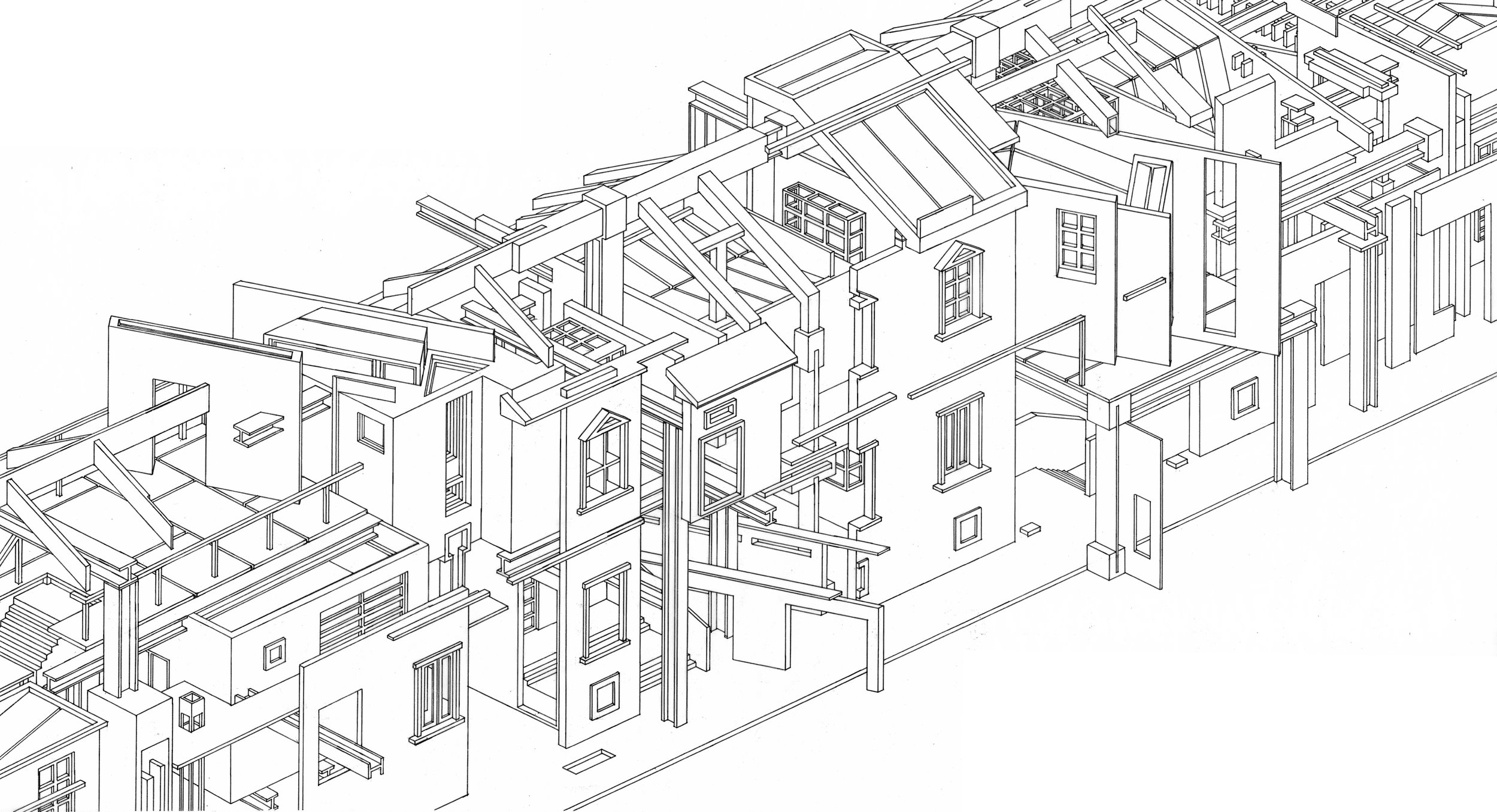
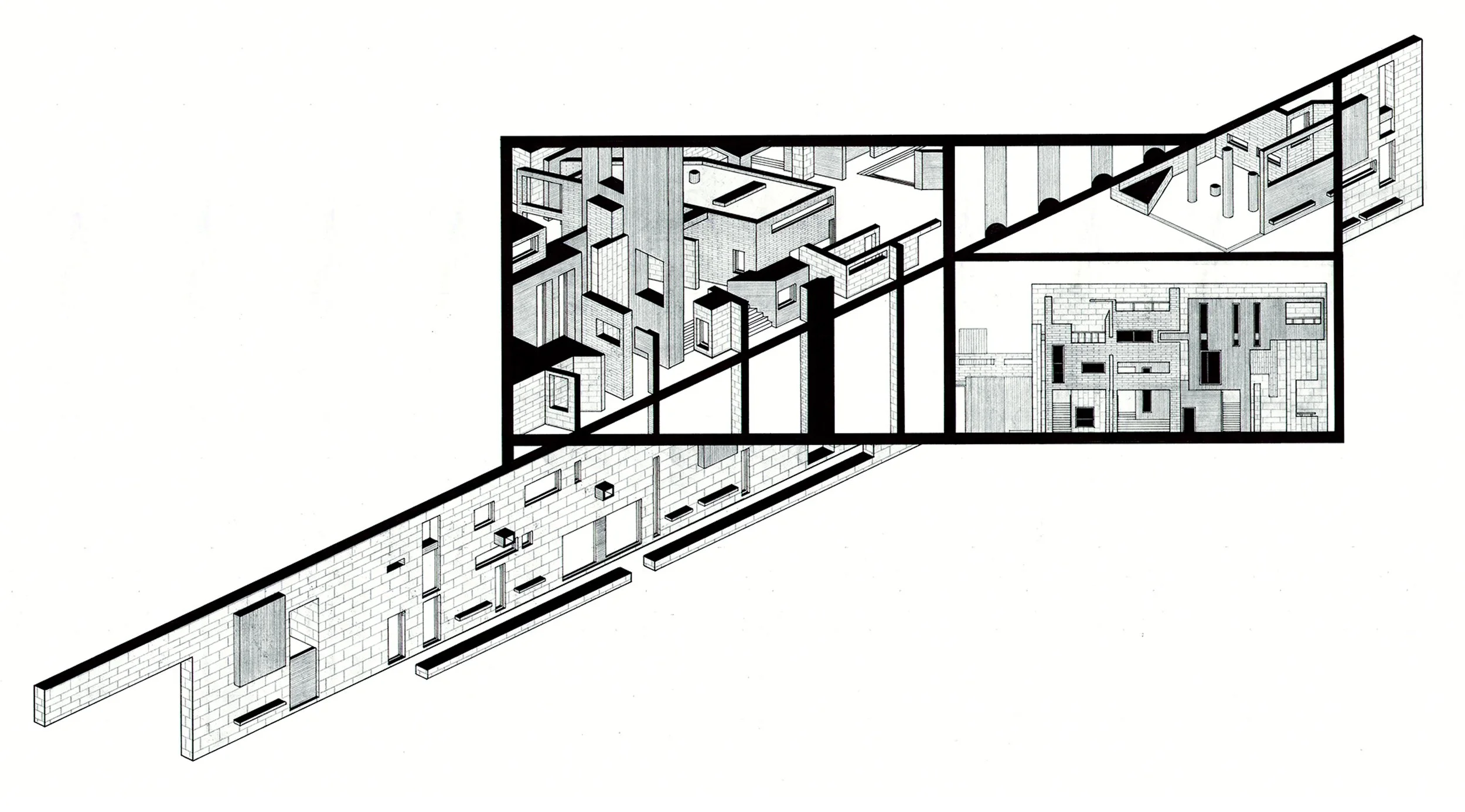
The Quirinal Palace in Rome presents a spatial order shaped by hierarchy and separation. Its architecture constructs and reinforces divisions between social classes, operating as a diagram of imbalance. Within this condition, the resistant gesture is to rupture—not as an act of sensitivity, but as a means of confronting and reconfiguring the structures it sustains.
-
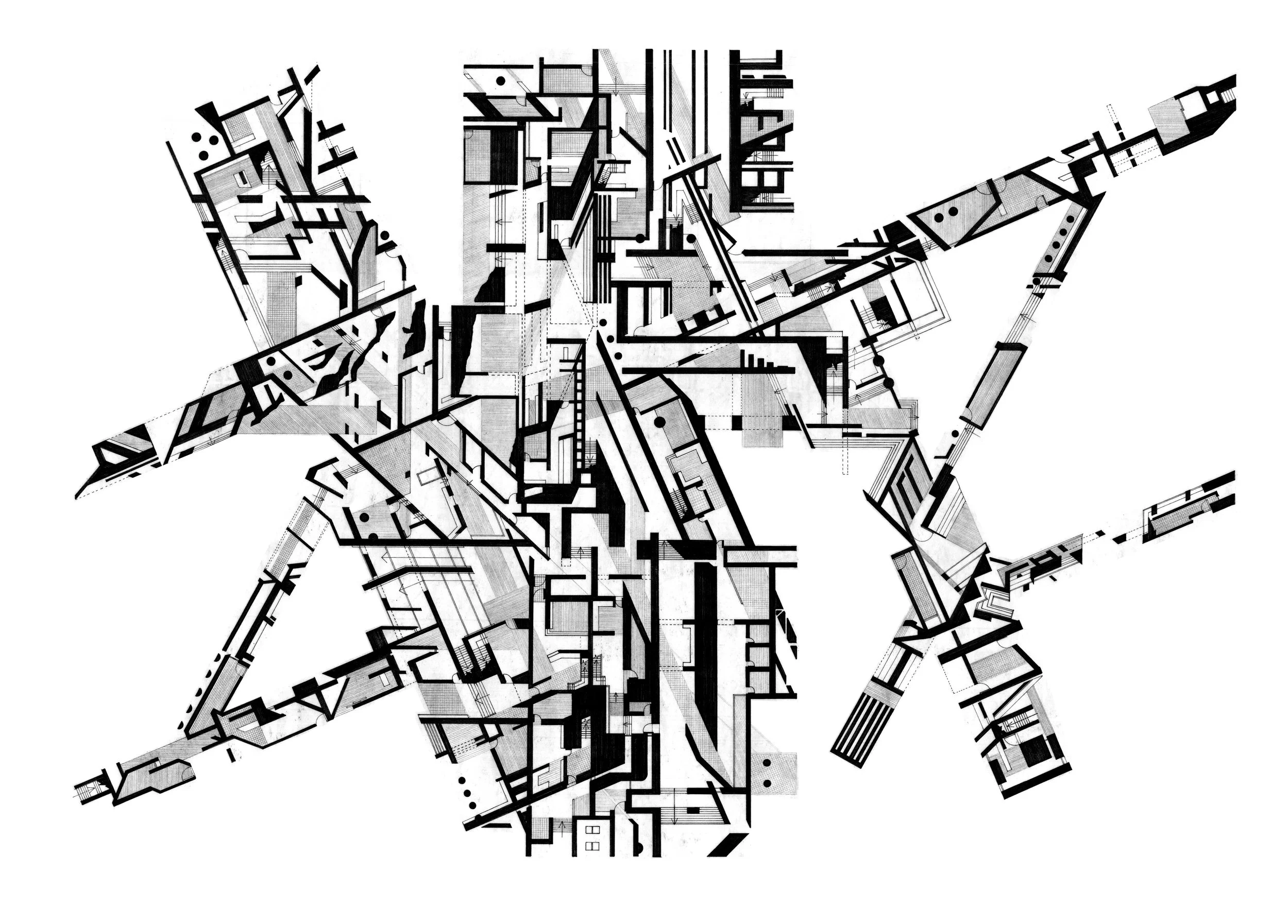
In response to this closed system, the drawings in the Quirinal Palace series project geometries that infiltrate, disrupt, and rework the palace. These interventions begin to suggest the possibility of use and inhabitation, operating as resistant translations of the existing space. Material or formal resolution is not the primary concern; instead, the drawings take initial steps toward potential experience.
To construct these works, plates from The Autonomous series are collaged and overlaid. Through this process, new compositional and spatial configurations emerge, allowing the drawings to interrogate the relationship between solid and void (ground and figure).
Plan (2022) Ink, Paper
Section (2022) Ink, Paper
Failed Projection (2022) Ink, Paper
Axonometric (2022) Ink, Paper
Re-alignment (2022) Ink, Paper
BROWN
REPETITION AS A TOOL FOR MISTRANSLATION AND INVENTION
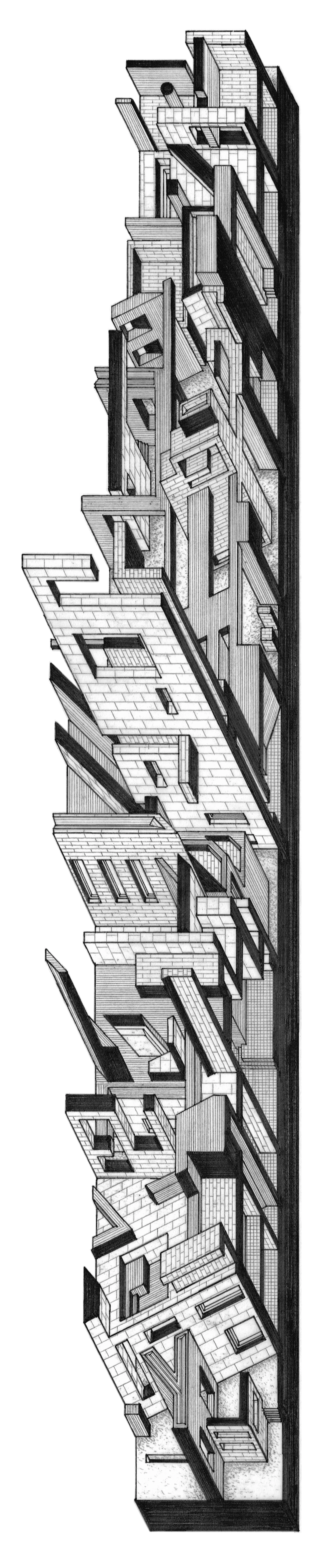
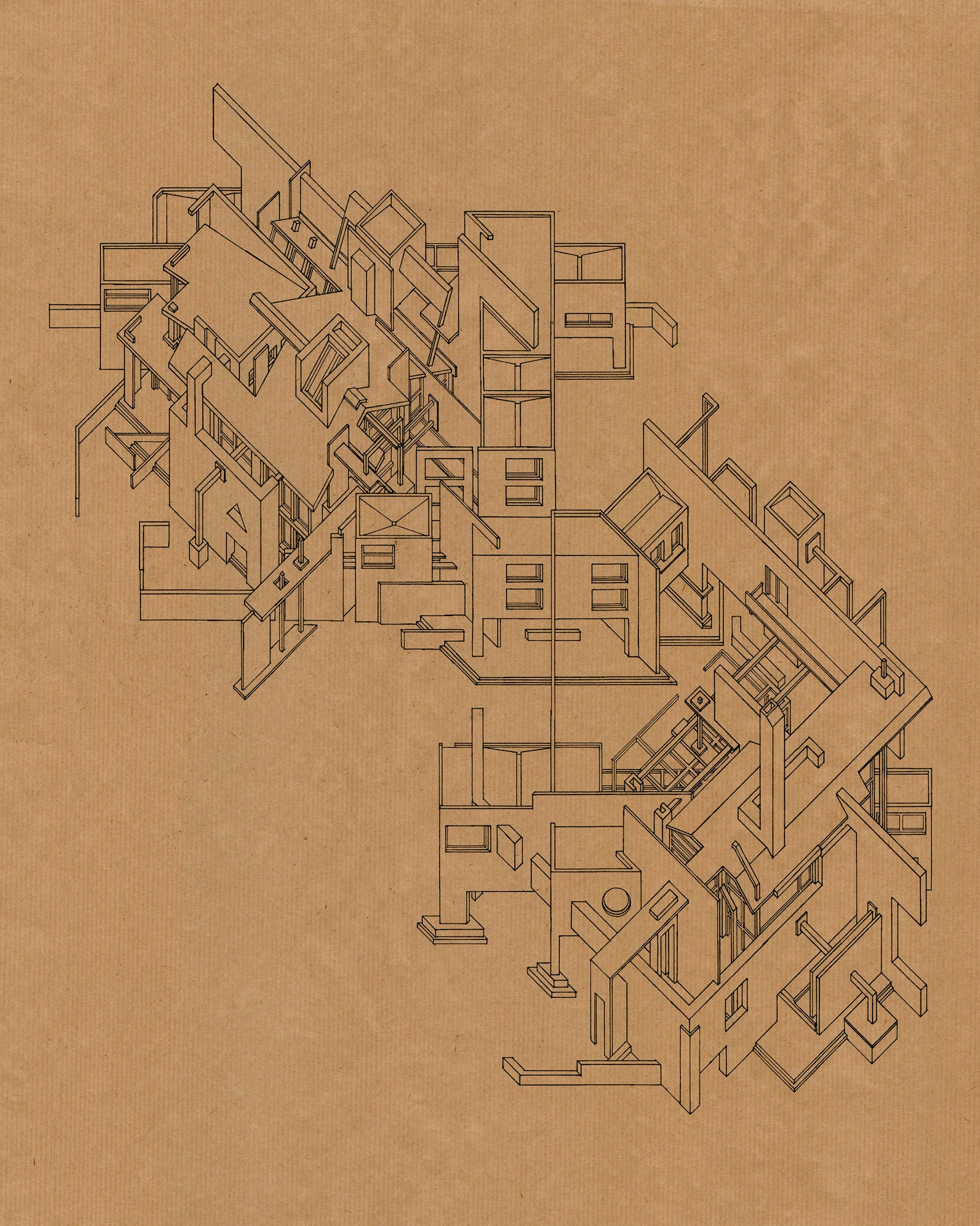
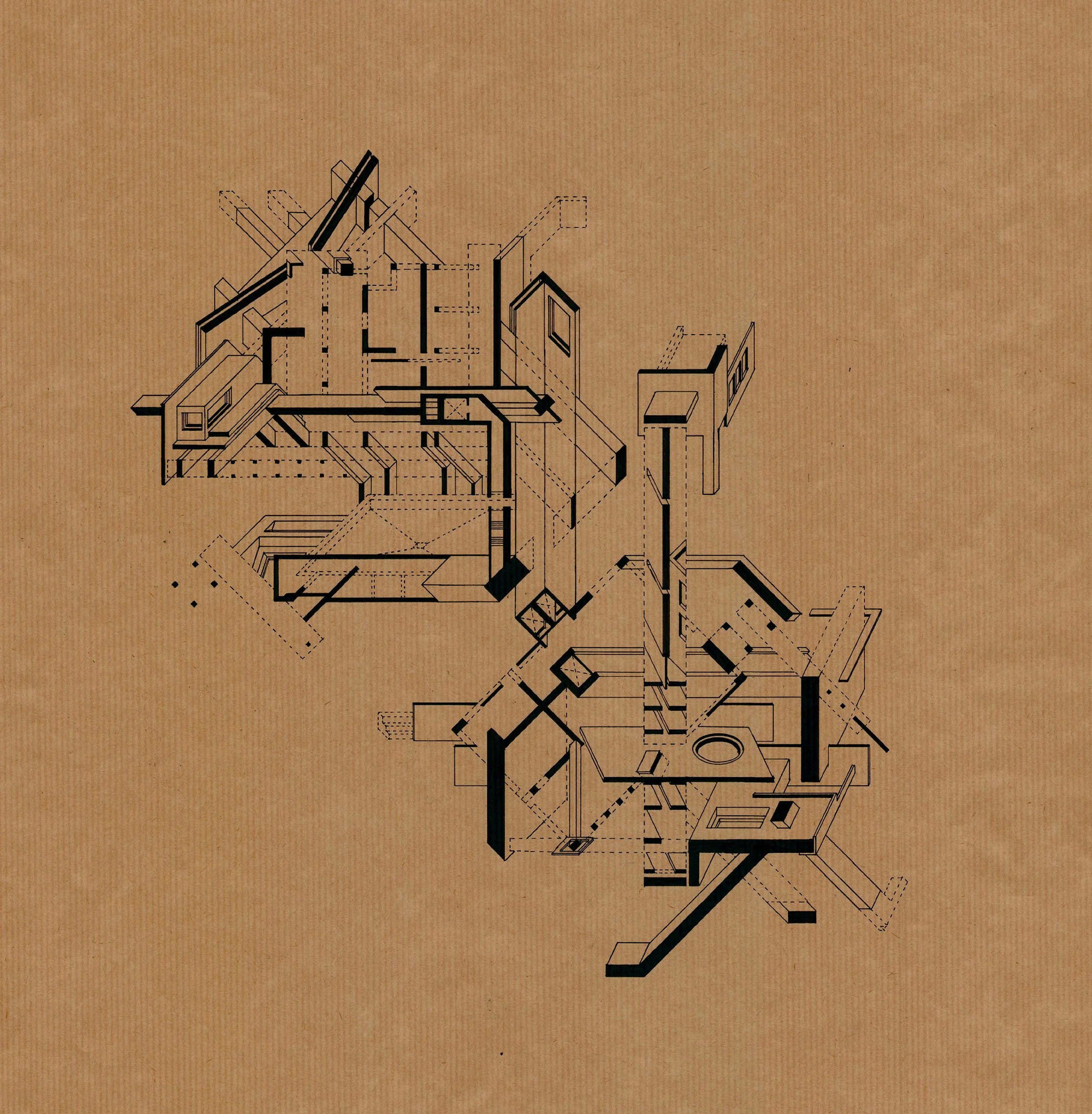
The Brown series examines repetition and the increasing geometric complexity it can produce. Each drawing returns to the same starting point, yet with every translation, elements are both lost and reconfigured.
-
What is “final” is not the concern. Instead, the work focuses on the generative potential of mistranslation, where repetition becomes a means of invention rather than replication.
Brown 3 (2023) Ink, Parcel Paper
Brown 4 (2023) Ink, Paper
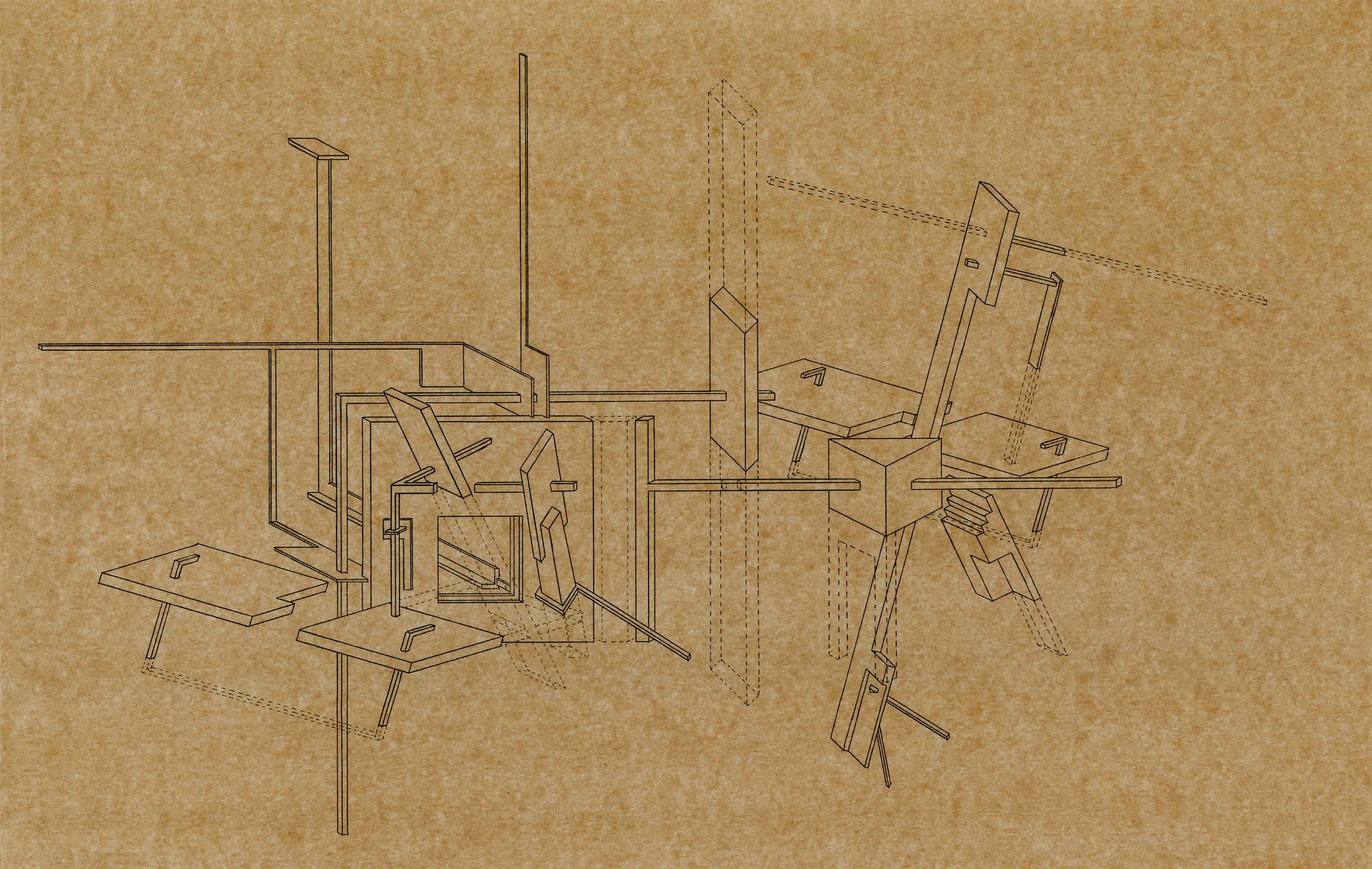
Brown 2 (2023) Ink, Parcel Paper
Brown (2023) Ink, Baking Paper
FRAGMENTS
EXPERIMENTS OF UNCERTAINTY
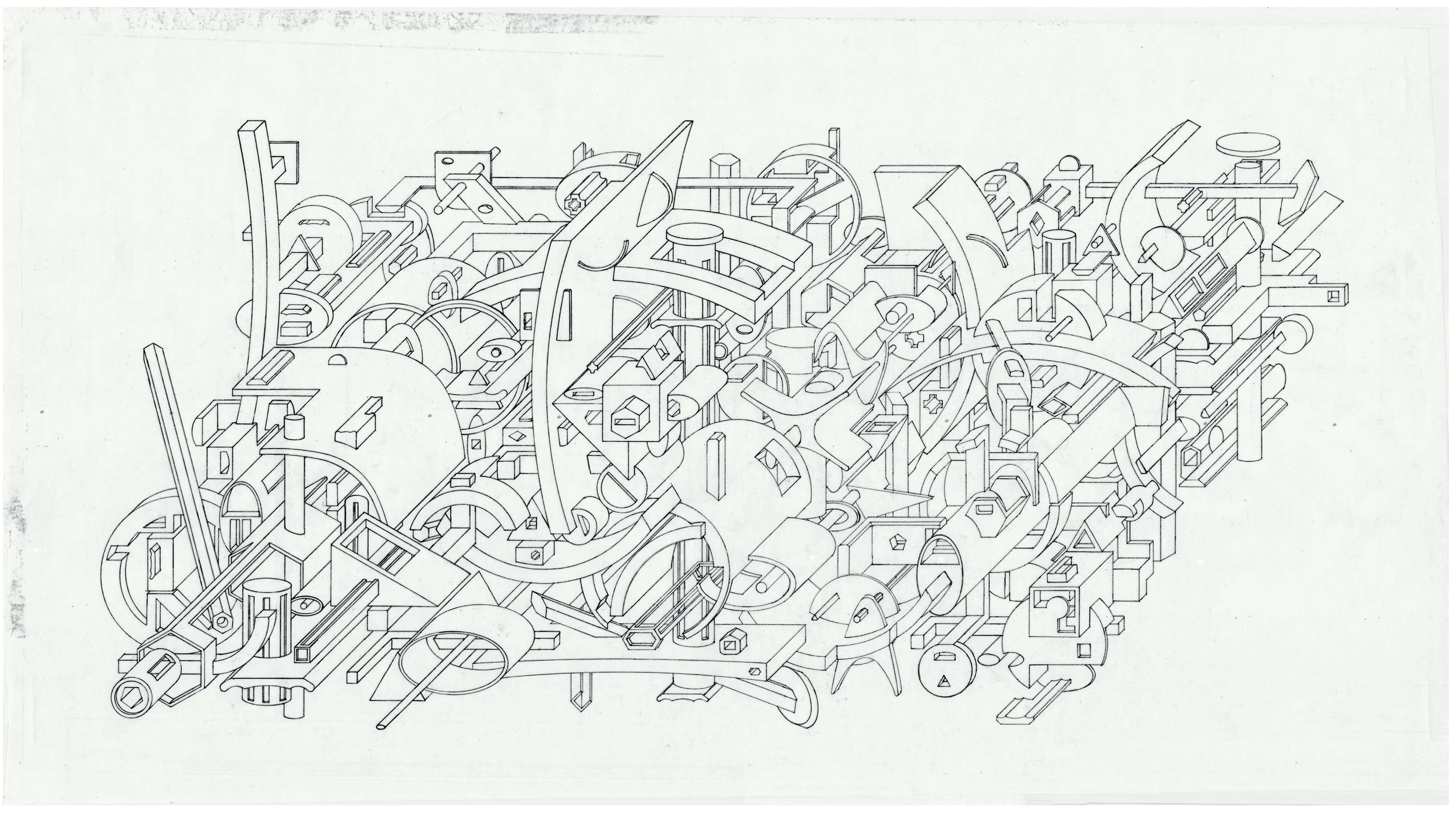
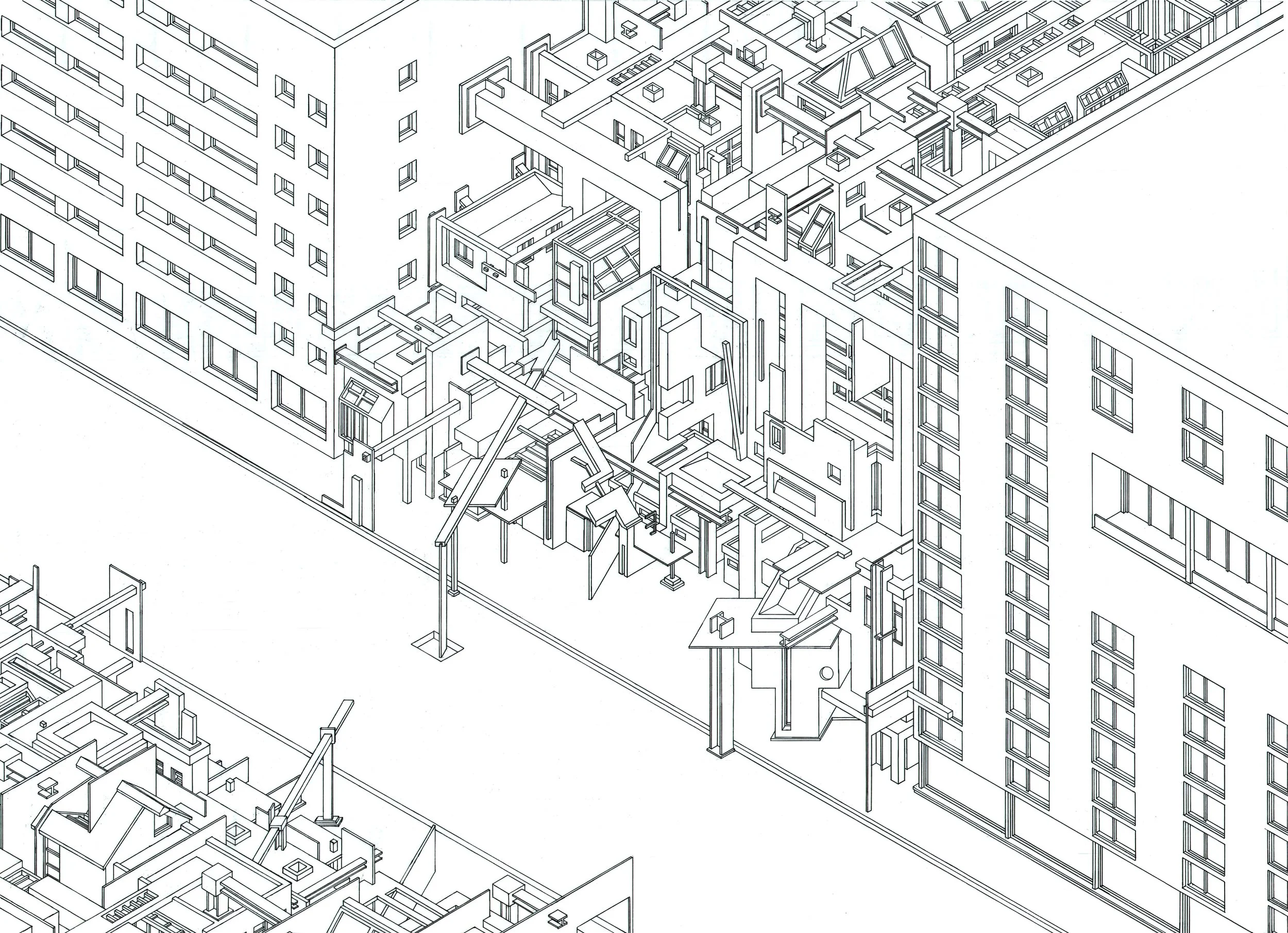
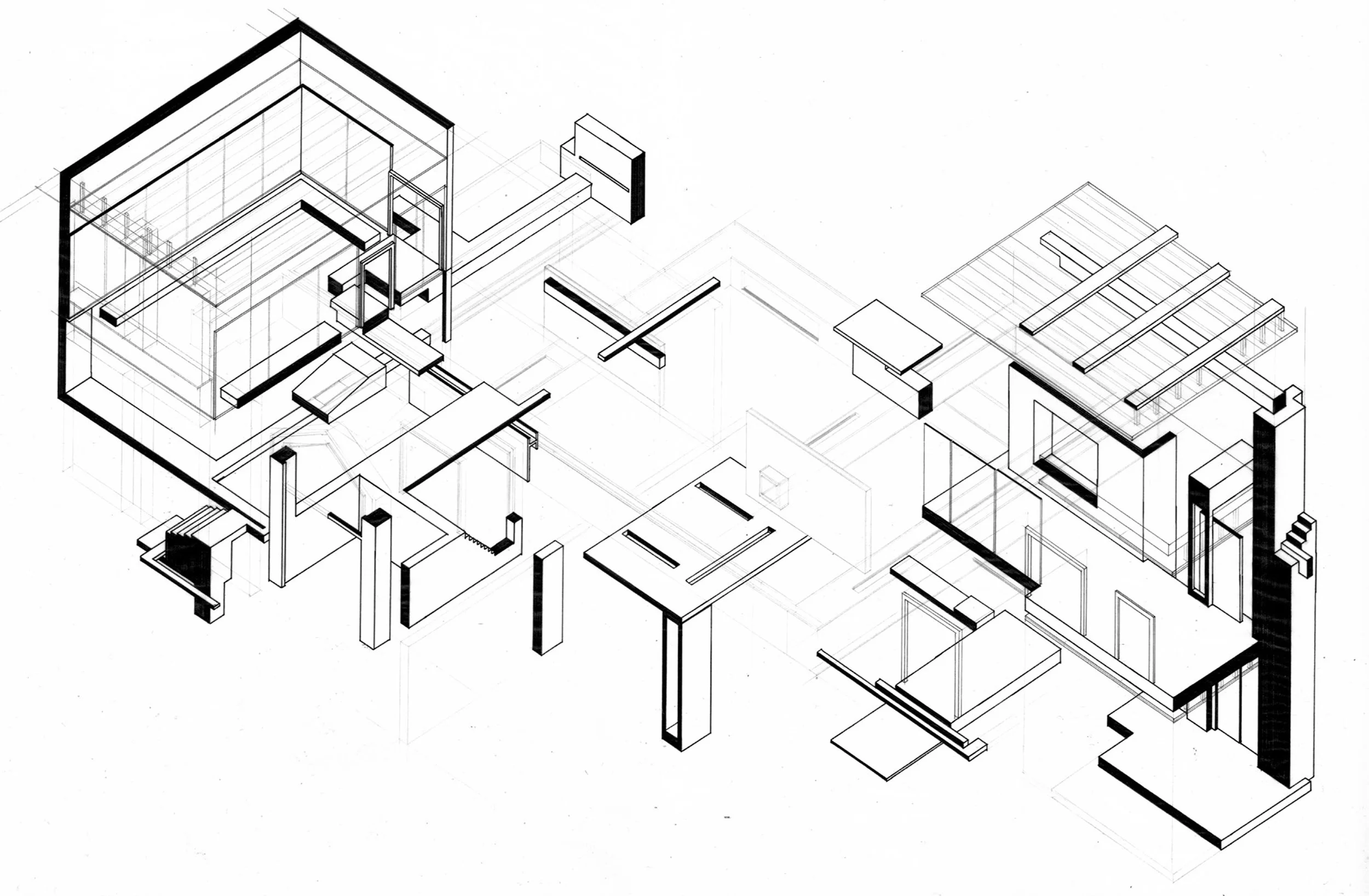
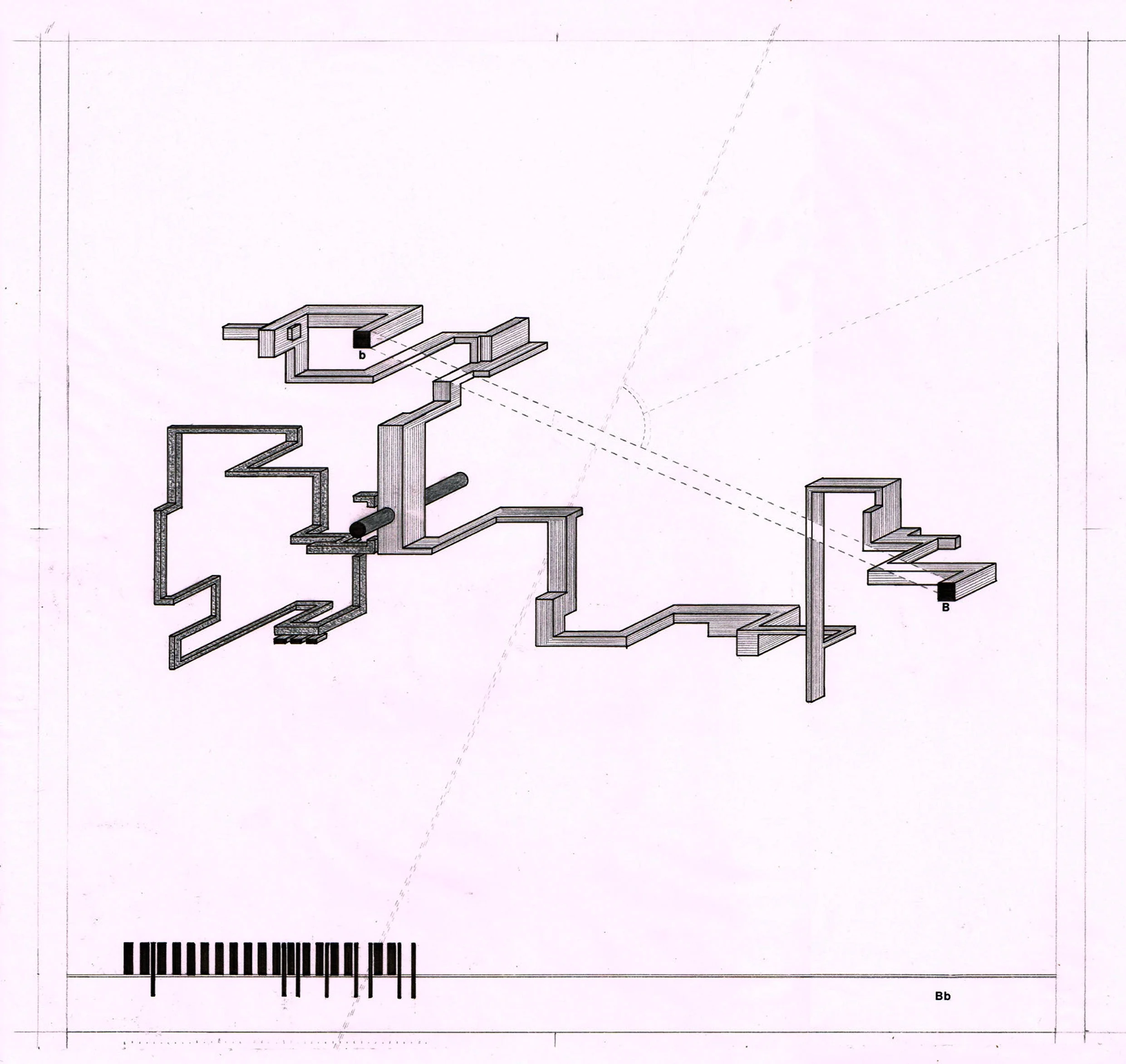
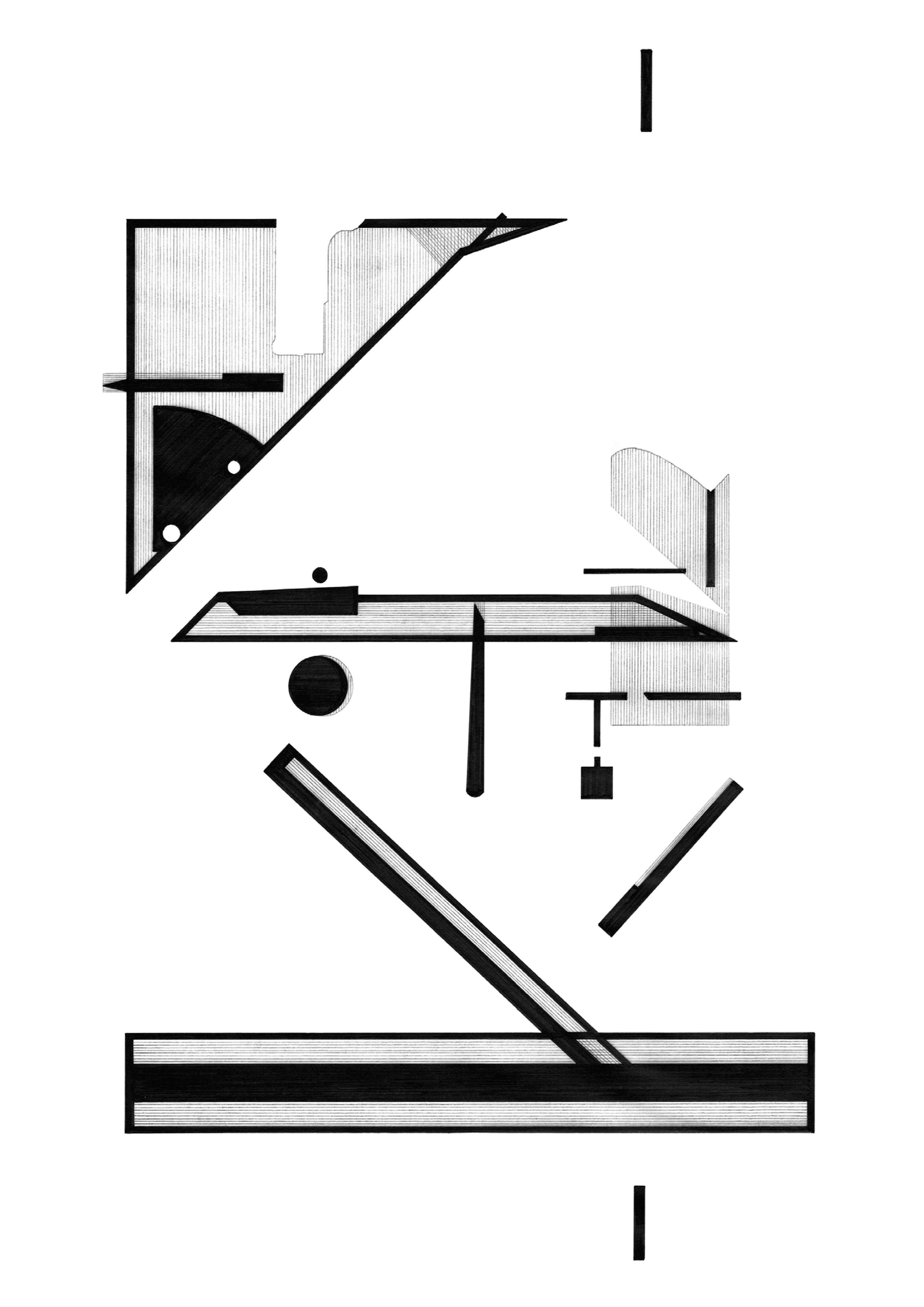
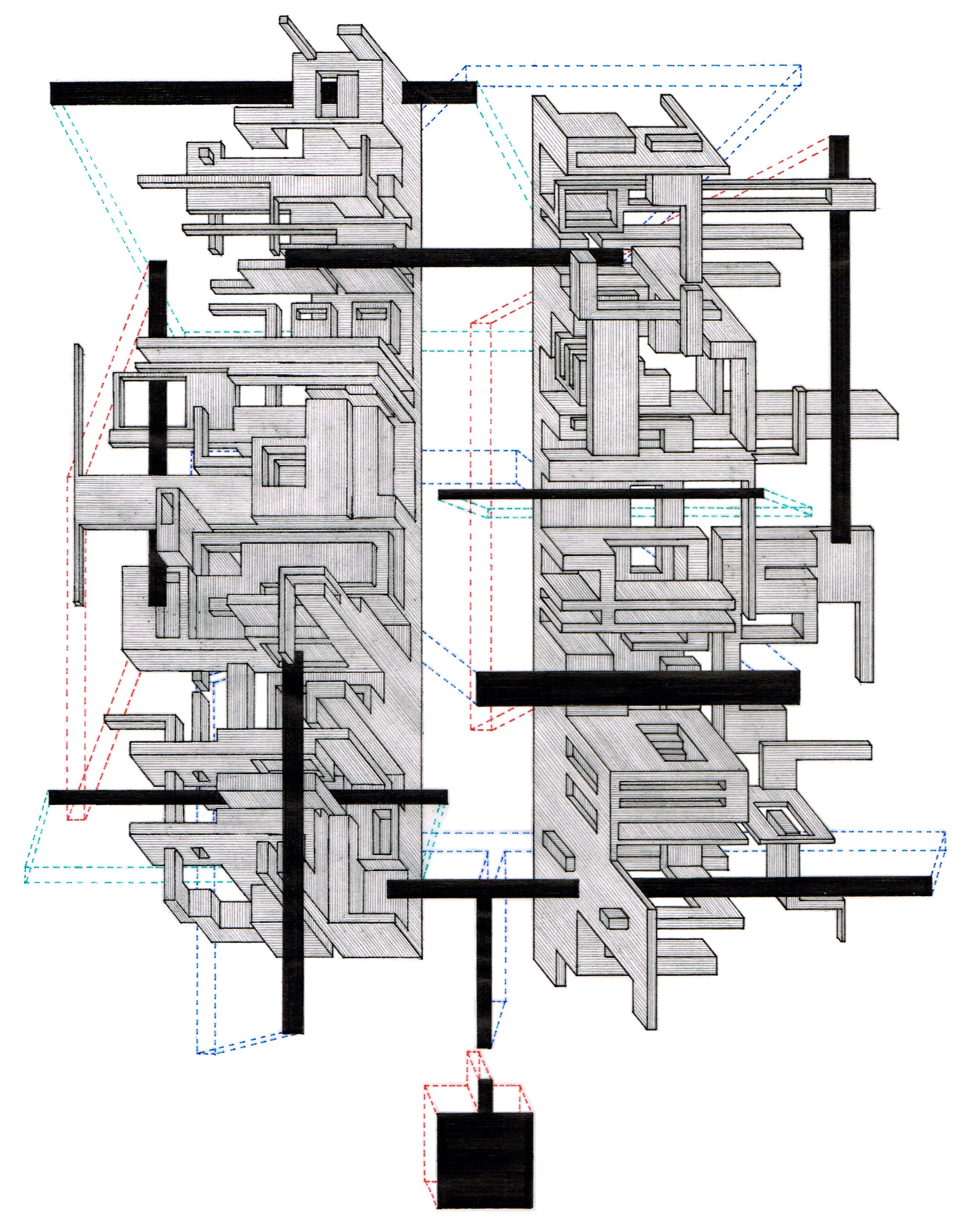
Fragments is not a defined series, but a collection of loosely connected thoughts and projections. Some works function as process tests, others as tectonic studies or compositional investigations.
-
Despite their differences, all drawings remain in dialogue with ’Pataphysical thinking, using uncertainty as a generative condition. Here, not knowing is not a limitation, but a starting point—guiding the work toward moments of discovery.
The Jinsihiou Sequence (2023) Ink, Paper
Infill (2024) Ink, Paper
APL (2021) Ink, Graphite, Paper
Bb (2021) Ink, Graphite, Paper
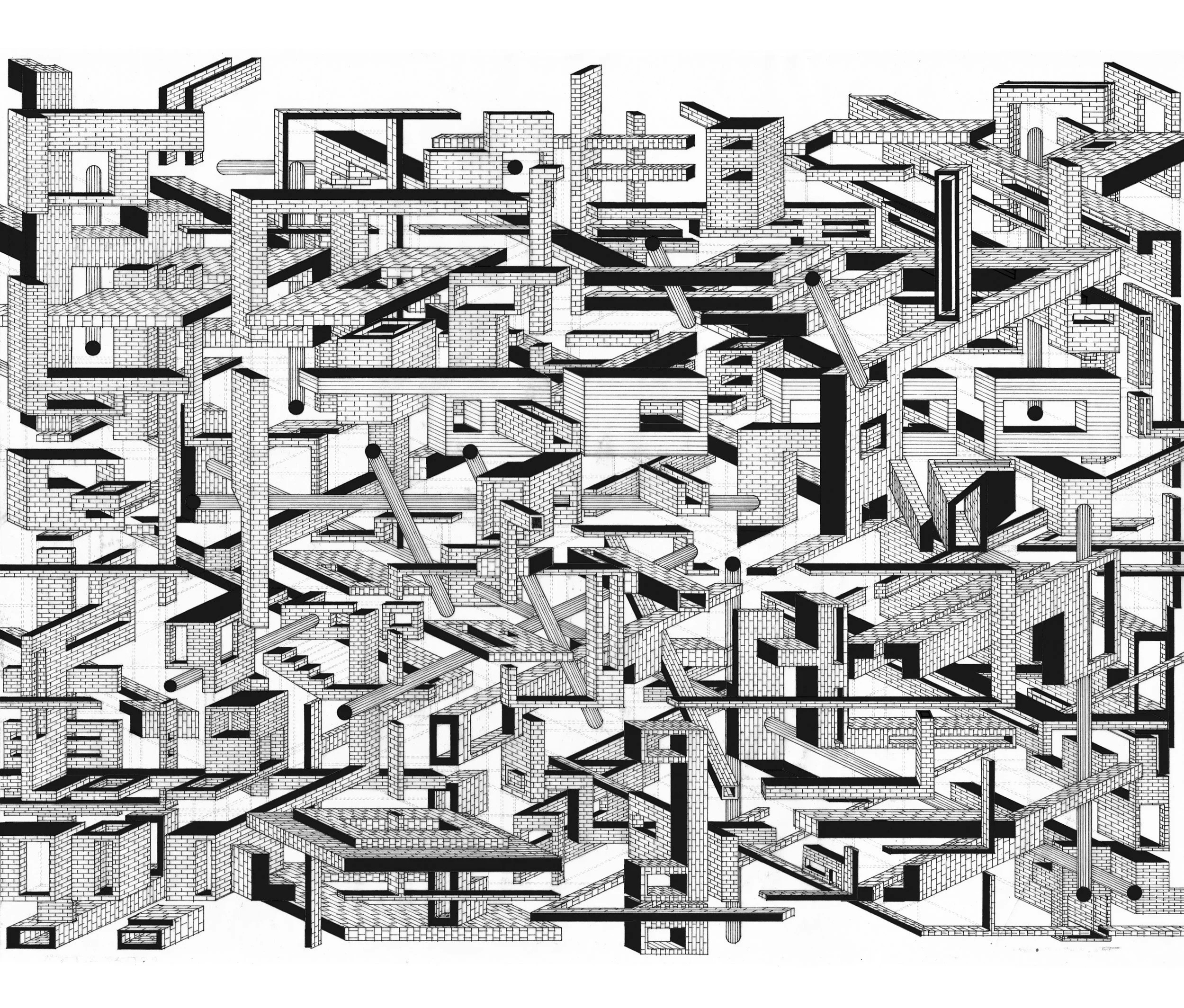
RGB (2022) Ink, Graphite, Paper
Untitled (2021) Ink, Paper
Tools (2020) Ink, Graphite, Paper