
 Image 1 of 2
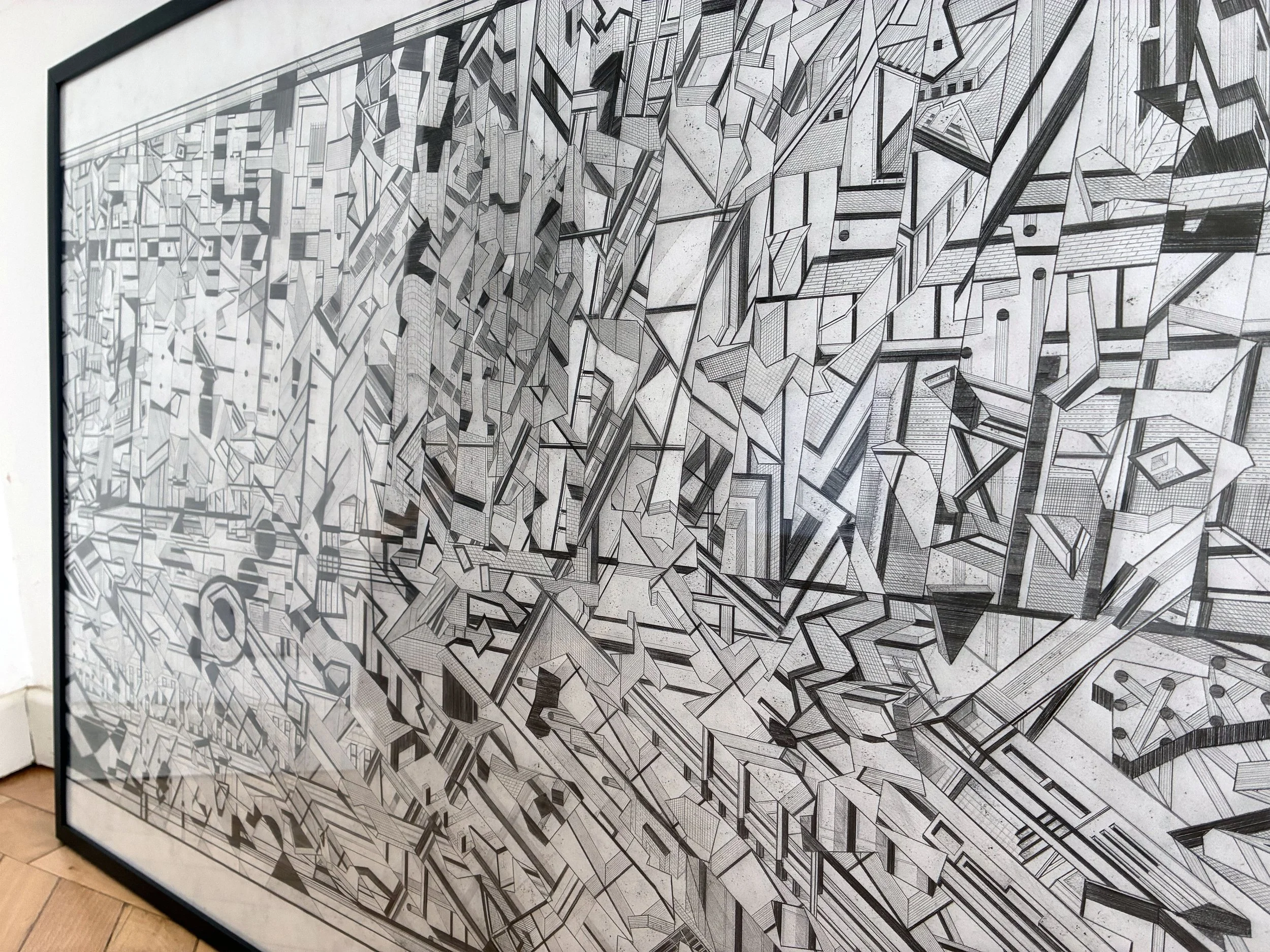 Image 2 of 2
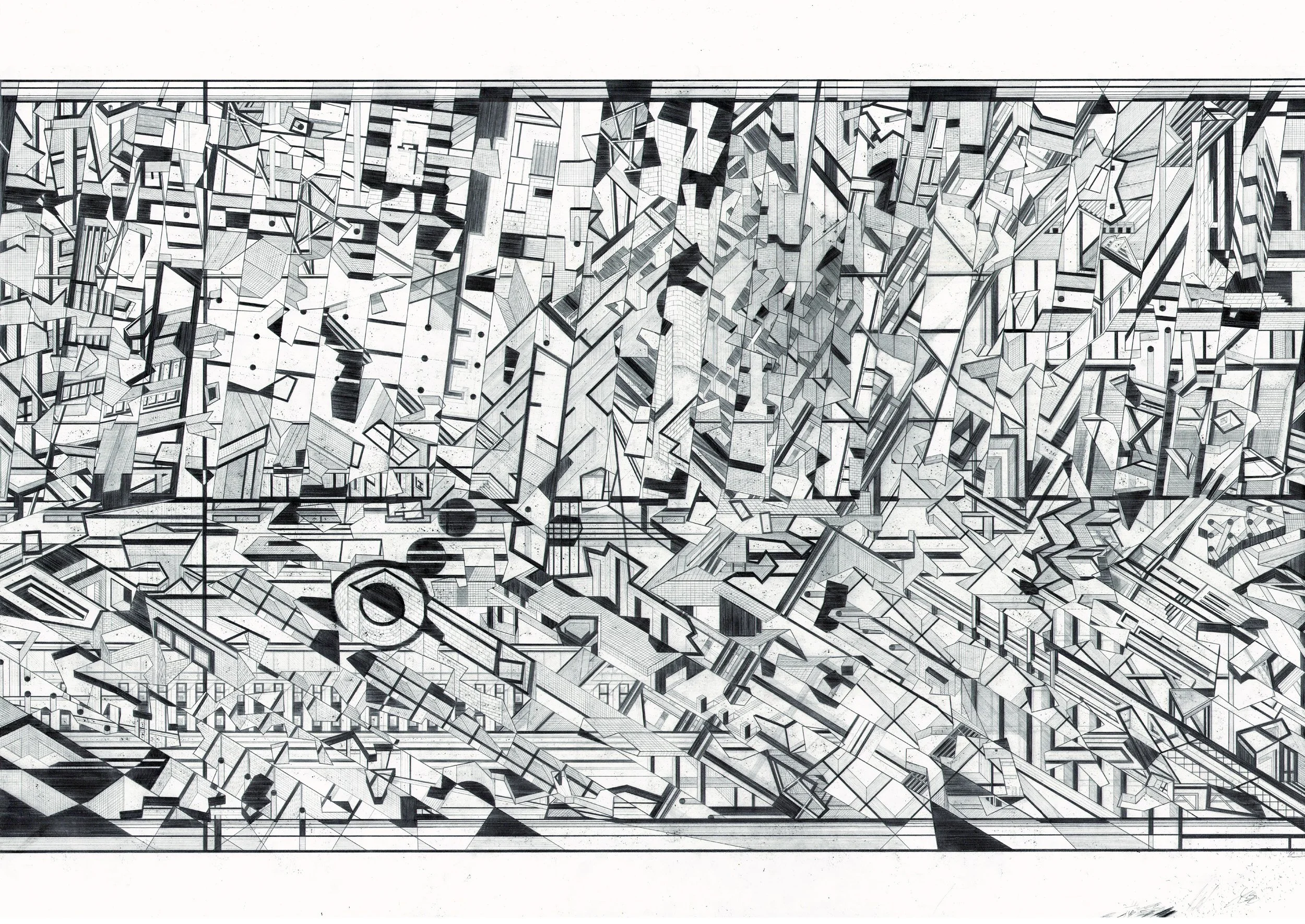
This gyclee print of my artwork, LOCUS, is produced using archival ink and is printed on high quality 290gsm art paper. All of my drawings are hand drawn using traditional architectural draughting methods.
This print is available in:
210mm x 297mm (A4)
297mm x 420mm (A3)
420mm x 594mm (A2)
Custom sizes available, just get in contact
(Original dimensions of the work are 594mm x 841mm.
All orders will be shipped in protective mailing tubes. Please allow 3 - 5 working days for your order to be processed.
LOCUS - (2019) Graphiter, Paper
Unlike many of the drawings that follow it LOCUS begins by using an existing spatial condition. It draws on mapped structures from both planned and unplanned camping sites at Glastonbury, brought together through a palimpsest process that cuts and overlays one framework with another.
This process produces a fragmented field of solids and voids, where order and contingency are set into tension. The resulting structure becomes a compositional ground for further exploration, suggesting multiple possibilities without resolving into a fixed form.
Rather than presenting a definitive outcome, LOCUS operates as a generative framework—an archive of spatial potential. It acts as a datum point in the work, introducing the question of whether invention can remain autonomous when shaped by an existing structure, or whether constraint is the very thing that enables it.
This gyclee print of my artwork, LOCUS, is produced using archival ink and is printed on high quality 290gsm art paper. All of my drawings are hand drawn using traditional architectural draughting methods.
This print is available in:
210mm x 297mm (A4)
297mm x 420mm (A3)
420mm x 594mm (A2)
Custom sizes available, just get in contact
(Original dimensions of the work are 594mm x 841mm.
All orders will be shipped in protective mailing tubes. Please allow 3 - 5 working days for your order to be processed.
LOCUS - (2019) Graphiter, Paper
Unlike many of the drawings that follow it LOCUS begins by using an existing spatial condition. It draws on mapped structures from both planned and unplanned camping sites at Glastonbury, brought together through a palimpsest process that cuts and overlays one framework with another.
This process produces a fragmented field of solids and voids, where order and contingency are set into tension. The resulting structure becomes a compositional ground for further exploration, suggesting multiple possibilities without resolving into a fixed form.
Rather than presenting a definitive outcome, LOCUS operates as a generative framework—an archive of spatial potential. It acts as a datum point in the work, introducing the question of whether invention can remain autonomous when shaped by an existing structure, or whether constraint is the very thing that enables it.