
 Image 1 of 1
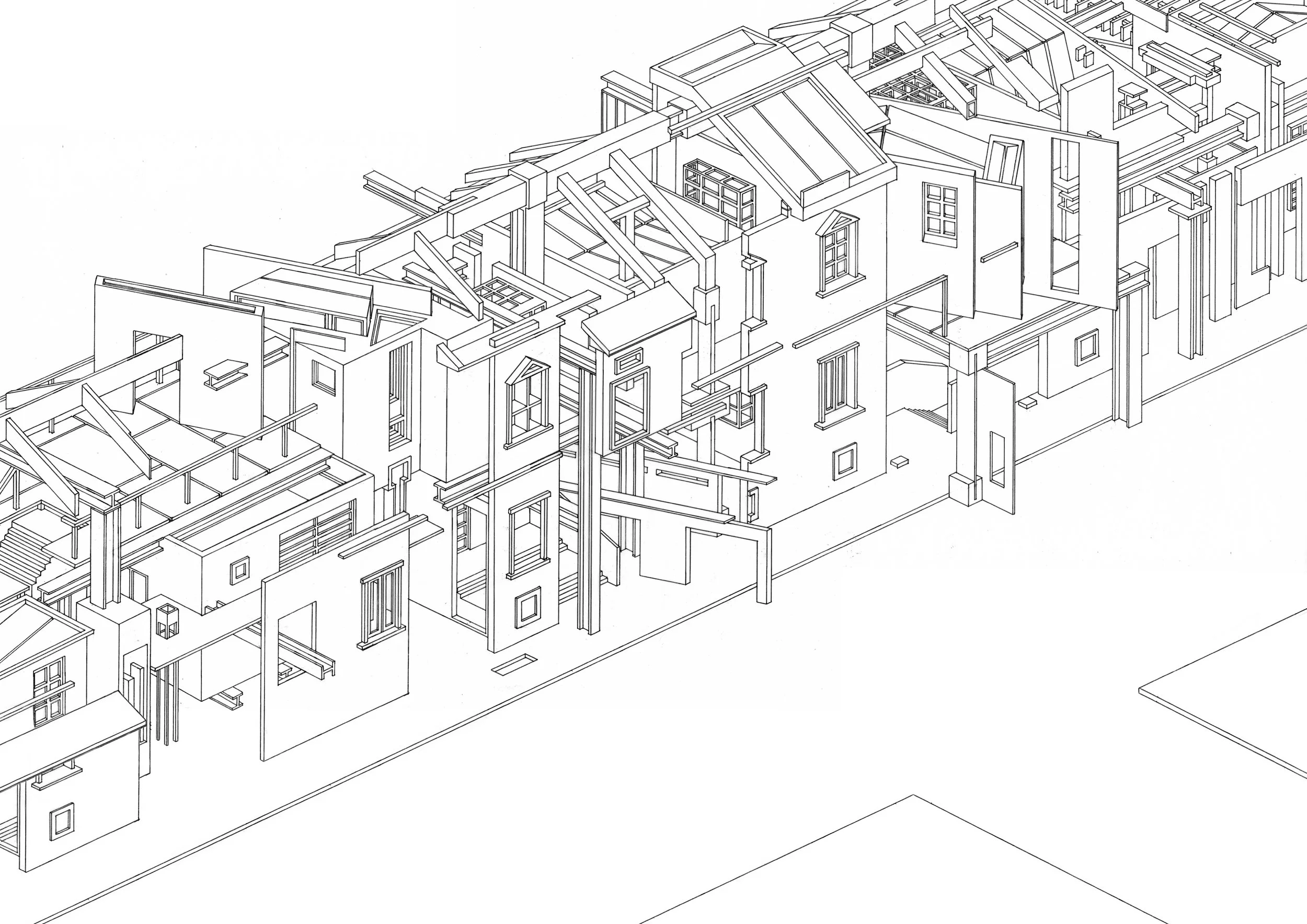
This gyclee print of my artwork, Collision, is produced using archival ink and is printed on high quality 290gsm art paper. All of my drawings are hand drawn using traditional architectural draughting methods.
This print is available in:
210mm x 297mm (A4)
297mm x 420mm (A3)
420mm x 594mm (A2)
Custom sizes available, just get in contact
(Original dimensions of the work are 420mm x 594mm. (16.5” x 23.4”)
All orders will be shipped in protective mailing tubes. Please allow 3 - 5 working days for your order to be processed.
Re-alignment - (2022) Ink, Paper
Re-Alignment signals a move away from the translations of extrusion found in Axo and Section. Rather than developing directly from Plan, the drawing reworks its source through a process of estimation and collision, allowing new forms to emerge independently. Consequently, the drawing moves towards a more explicit engagement with tectonics, structure, and material presence.
In Re-Alignment, each line contributes to a constructable element, assembling fragments that suggest weight, connection, and enclosure. Some forms appear familiar, while others remain provisional, but all are drawn into a shared field where relationships are built through accumulation of tangibility.
In this drawing a sense of stasis found in other drawing series begins to break down. The fragments touch and join, introducing permeability and variation, suggesting a more perceivable sense of embodiment.
This gyclee print of my artwork, Collision, is produced using archival ink and is printed on high quality 290gsm art paper. All of my drawings are hand drawn using traditional architectural draughting methods.
This print is available in:
210mm x 297mm (A4)
297mm x 420mm (A3)
420mm x 594mm (A2)
Custom sizes available, just get in contact
(Original dimensions of the work are 420mm x 594mm. (16.5” x 23.4”)
All orders will be shipped in protective mailing tubes. Please allow 3 - 5 working days for your order to be processed.
Re-alignment - (2022) Ink, Paper
Re-Alignment signals a move away from the translations of extrusion found in Axo and Section. Rather than developing directly from Plan, the drawing reworks its source through a process of estimation and collision, allowing new forms to emerge independently. Consequently, the drawing moves towards a more explicit engagement with tectonics, structure, and material presence.
In Re-Alignment, each line contributes to a constructable element, assembling fragments that suggest weight, connection, and enclosure. Some forms appear familiar, while others remain provisional, but all are drawn into a shared field where relationships are built through accumulation of tangibility.
In this drawing a sense of stasis found in other drawing series begins to break down. The fragments touch and join, introducing permeability and variation, suggesting a more perceivable sense of embodiment.